Sheep Flock Records for Lamb Marketing: What Buyers and Processors Actually Want to See
Sheep producers selling direct or to processors need specific records at the point of sale. This guide covers what lamb buyers, breed registries, and USDA.
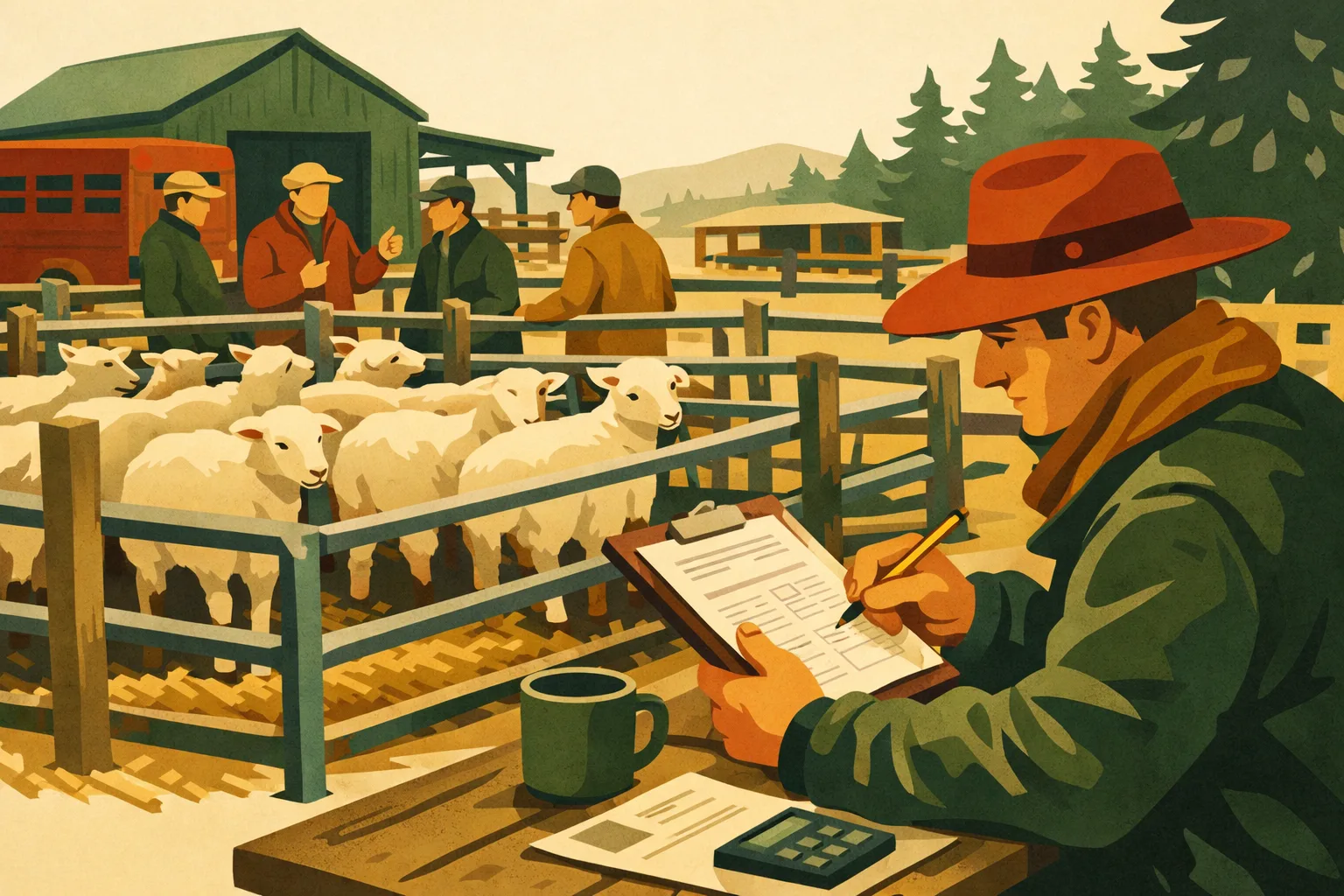
A lamb can be healthy, well-finished, and ready for market—but if the records behind that lamb are scattered across notebooks, text messages, and memory, you can lose buyer confidence fast. Good records do more than satisfy paperwork requests. They help you prove age, ownership, treatment status, genetics, performance, and processing eligibility when money is on the line.
For commercial sheep producers, sheep flock management records are not just internal notes. They are sales tools. Direct-market customers want confidence. Livestock buyers want consistency. USDA-inspected processors want clean identification and treatment histories. Breed registries want accurate parentage and transfers. The better your records, the easier it is to sell lambs, avoid processing delays, defend your pricing, and make breeding decisions that improve next year’s crop.
This guide breaks down the specific records sheep operations should keep for lamb marketing, USDA-inspected processing, and breed registry certification.
Why Lamb Marketing Records Matter
Most flock records are created during day-to-day management: breeding, lambing, tagging, weighing, treating, weaning, and sorting. Marketing is where those records become valuable.
A buyer or processor may not ask for your full flock history, but they will often want proof of specific facts:
- Which lambs are being sold
- How old they are
- Whether they are intact males, wethers, or ewe lambs
- What they weigh
- Whether they have received medications
- Whether withdrawal periods are complete
- Whether they are eligible for the intended sale channel
- Whether registration papers or parentage records match the animal
- Whether IDs match your invoice, health certificate, or processing list
If you cannot answer quickly, the buyer may discount the lambs, delay pickup, reject animals, or decide not to buy again.
Good records also protect your operation. If a customer questions a carcass, a processor flags a residue concern, or a registry asks for clarification, you need a clean record trail.
The Core Sheep Flock Management Records Every Marketing Program Needs
Before separating records by sales channel, every commercial flock should maintain a basic record structure. These are the records that support nearly every lamb sale.
Flock Inventory and Animal Identification
Every lamb intended for sale should be traceable to a flock record.
At minimum, record:
- Farm or flock name
- Animal ID or tag number
- Scrapie tag number, if different
- Electronic ID, if used
- Sex
- Birth date or estimated birth date
- Dam ID
- Sire ID or sire group
- Breed or cross
- Birth type: single, twin, triplet, quad
- Rearing type: dam-raised, grafted, bottle-raised, orphan
- Current status: active, sold, culled, died, retained
For marketing, individual identification matters most when selling:
- Breeding stock
- Registered lambs
- Direct-market lambs processed under customer orders
- Lambs with health or treatment histories that must be tracked individually
- Lambs going to processor appointments under specific names or invoices
For feeder lambs or commodity lots, group records may be acceptable for some uses, but you still need enough traceability to know which animals belong in the sale group and whether they are eligible for slaughter.
Lambing Records
Lambing records support age verification, performance evaluation, and breed registry applications.
Record these details at lambing:
- Lamb ID
- Date born
- Dam ID
- Sire ID or breeding group
- Birth weight, if collected
- Birth type
- Assistance level: unassisted, pulled, malpresentation, C-section
- Vigor score or notes
- Colostrum intervention, if any
- Mothering ability notes
- Lamb survival status
For direct-market sales, lambing records help you explain seasonal availability and size differences. For breeding stock, they support claims about prolificacy, maternal lines, and performance.
For registry work, lambing records are essential. Many registry mistakes start because lambs were tagged late or dam/sire information was reconstructed after the fact.
Breeding and Exposure Records
Breeding records connect lambs to sires and production groups.
Record:
- Ram ID
- Ewe group
- Exposure start date
- Exposure end date
- Breeding pasture or pen
- Artificial insemination date, if applicable
- CIDR or synchronization protocol, if used
- Backup ram used, if any
- Pregnancy diagnosis result, if performed
If multiple rams run together, record the sire group accurately. Do not assign an individual sire unless you have controlled exposure, DNA verification, or another reliable method.
These records matter for:
- Registered lambs
- Replacement ewe selection
- Performance testing
- Buyer questions about bloodlines
- Avoiding accidental inbreeding
- Identifying rams that produce marketable lambs
Health and Treatment Records
Health records are among the most valuable records for lamb marketing because they directly affect slaughter eligibility and buyer trust.
A treatment record should include:
- Animal ID or group ID
- Date treated
- Diagnosis or reason for treatment
- Product name
- Active ingredient, if known
- Dosage
- Route of administration
- Person administering treatment
- Lot number, when practical
- Meat withdrawal period
- Milk withdrawal period, if relevant
- Withdrawal completion date
- Outcome or follow-up
For lambs headed to slaughter, the withdrawal completion date is the key marketing field. The animal should not be sold for processing until the withdrawal period has cleared.
Avoid relying on memory. If a lamb was treated for pneumonia, foot rot, pinkeye, parasites, or injury, the marketing record must show whether that lamb is cleared for harvest.
Weight and Performance Records
Weight records help you sort lambs accurately and avoid surprises at sale or processing.
Useful weights include:
- Birth weight
- 30-day or 60-day weight
- Weaning weight
- Post-weaning weight
- Pre-sale weight
- Finished live weight
- Processor live weight, if provided
- Hot carcass weight, if provided
- Yield or cut-out notes, if available
Commercial producers do not need to collect every possible weight on every lamb. The most practical approach is to capture weights at major decisions:
- Weaning
- First market sort
- Final sale or processor delivery
These weights tell you which lambs are ready, which need more feed, and which breeding groups are producing your best market animals.
What Direct-Market Lamb Buyers Want to See
Direct-market lamb sales can include whole lambs, half lambs, individual retail cuts, freezer lambs, restaurant accounts, ethnic holiday sales, farmers market customers, and local delivery customers. Each customer type asks different questions, but they all want confidence.
Records That Build Customer Confidence
Direct-market buyers often care about how the lamb was raised. Your records should support factual claims, not vague marketing language.
Useful records include:
- Lamb ID or lot ID
- Birth season
- Breed or cross
- Feeding program
- Pasture access dates or grazing notes
- Grain or concentrate feeding period, if used
- Health treatment status
- Withdrawal completion
- Processing date
- Processor name and inspection status
- Cut sheet
- Package inventory
- Final hanging weight or carcass weight
- Customer order and payment status
If you promote lamb as grass-fed, pasture-raised, grain-finished, antibiotic-free, or naturally raised, you need records that support those claims. Do not make production claims that your records cannot verify.
For example, “no antibiotics ever” requires individual animal treatment tracking and a clear policy for removing treated animals from that sales program. “Pasture-raised” should be supported by grazing or group movement records, even if simple.
Order Records for Freezer Lamb Sales
Freezer lamb customers expect clear communication before and after processing. Poor order records are one of the fastest ways to create confusion.
For each customer order, track:
- Customer name
- Contact information
- Order type: whole, half, quarter where allowed, custom share, retail cuts
- Deposit amount
- Balance due
- Lamb ID or lot assignment
- Processor appointment date
- Cut sheet completion status
- Customer instructions
- Pickup date
- Final weight
- Final invoice
- Payment received
- Delivery or pickup confirmation
If customers call the processor directly with cut instructions, record whether they completed the call. Missed cut sheets delay processing and create unhappy customers.
Retail Cut Inventory Records
If you sell individual cuts from USDA-inspected lambs, inventory records become part of your marketing system.
Track:
- Processing date
- Lot or lamb ID
- Product type: chops, ground, stew meat, shanks, ribs, leg, shoulder
- Package count
- Package weights
- Label information
- Storage freezer
- Sale date
- Customer or outlet
- Price per pound or per package
- Remaining inventory
This helps you know what you actually have to sell. It also shows which cuts move quickly, which cuts pile up, and whether pricing needs adjustment.
Retail cut inventory records support decisions like:
- Whether to grind more trim
- Whether to offer bundles
- Whether to adjust cut sheets
- Whether restaurants are taking the products they promised
- Whether your freezer lamb program is more profitable than livestock sales
Direct-Market Record Risks to Avoid
Common record problems in direct lamb marketing include:
- Assigning the same lamb to two customers
- Selling lambs before withdrawal periods are complete
- Forgetting who paid deposits
- Losing cut sheet instructions
- Failing to separate custom-exempt and USDA-inspected product
- Not tracking freezer inventory by lot
- Making unsupported production claims
- Not recording customer complaints or refunds
These mistakes create real costs. They can cost repeat customers, processing slots, freezer space, and credibility.
What USDA-Inspected Processors Want From Sheep Producers
Processors want animals that are properly identified, eligible for slaughter, delivered on time, and matched to the paperwork. They are not interested in digging through your lambing book at the unloading area.
Your goal is to provide a clean, simple processing packet.
Processor-Facing Lamb Information
For USDA-inspected lamb processing, prepare a delivery list that includes:
- Producer name and contact information
- Processor appointment date and time
- Number of lambs delivered
- Lamb IDs
- Scrapie tag numbers, where applicable
- Sex/class
- Approximate live weight
- Customer assignment, if freezer lambs
- Processing instructions or cut sheet status
- Slaughter authorization
- Treatment and withdrawal confirmation
The processor may have its own intake form. Even then, bringing your own list helps prevent mix-ups.
Treatment and Withdrawal Records
Processors and inspectors are concerned with drug residues. Your treatment records should make it easy to confirm that lambs delivered for harvest are eligible.
Before delivery, review:
- All treatments given to each lamb or sale group
- Product labels and withdrawal periods
- Dates treatments were administered
- Withdrawal completion dates
- Any extra-label drug use records from a veterinarian
- Animals that must be held back
If a lamb is still inside a withdrawal period, do not send it. Mark it clearly in your records and physically separate it if necessary.
Custom-Exempt Versus USDA-Inspected Records
Many sheep producers use both custom-exempt and USDA-inspected processors. The records should clearly separate these channels.
Custom-exempt processing is generally for the owner of the animal and is not for resale as retail meat. USDA-inspected processing is required for meat sold by the cut across state lines and is commonly required for retail sales channels. State rules vary, and producers should confirm requirements with their state department of agriculture, local health authority, and processor.
From a record-keeping standpoint, separate:
- Animals sold live to a customer before processing
- Animals processed under custom-exempt status
- Animals processed under USDA inspection
- Retail cuts available for resale
- Product that cannot legally be resold
Do not mix inventory categories in your freezer or records. Labeling and storage records should make the difference obvious.
Processing Yield and Carcass Records
Carcass records improve future sheep flock management decisions. They also help explain final customer pricing.
Track when available:
- Live weight at farm
- Live weight at processor
- Hot carcass weight
- Dressing percentage, if calculated
- Fat cover comments
- Carcass defects or condemnations
- Final packaged weight
- Cut yield by category
- Customer feedback
Processors may not provide every data point, but record what they do provide. Over time, carcass records show whether your lambs are going too light, too heavy, too fat, or too inconsistent for your market.
Processor Communication Log
Keep a simple record of processor communication:
- Appointment date scheduled
- Number of head reserved
- Delivery time
- Required paperwork
- Cut sheet deadline
- Label approval status, if applicable
- Pickup date
- Storage fees, if any
- Payment status
Processing slots are valuable. Missing appointments or arriving with the wrong number of lambs can strain relationships. A communication log helps you manage appointments like production assets.
What Breed Registries Want to See
Breed registry records serve a different purpose than meat marketing records. Registries want accurate identity, parentage, ownership, and breed eligibility.
For producers selling registered breeding sheep, registry records directly affect price and buyer confidence.
Individual Animal Identification
Registered animals need permanent, consistent identification. Depending on the registry, acceptable ID may include:
- Ear tag
- Tattoo
- Electronic ID
- Flock tag
- Scrapie tag
- Registration number after issuance
The ID on the animal should match the ID on:
- Lambing record
- Registration application
- Sale invoice
- Health certificate, if required
- Transfer paperwork
Never rely on “the big ewe lamb with the white spot” as an identification method. Visual descriptions are useful notes, not primary records.
Parentage and Breeding Records
Registry applications commonly require:
- Lamb birth date
- Sex
- Birth type
- Dam registration number
- Sire registration number
- Breeder name
- Owner name
- Flock prefix or farm name
- Service type: natural, AI, embryo transfer
- Multiple birth information
- DNA information, if required
For natural service, breeding exposure records must support the sire assignment. If a ewe was exposed to more than one ram during a possible conception window, the registry may require DNA testing or may not accept an individual sire assignment without proof.
Ownership and Transfer Records
When selling registered sheep, track:
- Buyer name
- Buyer address and contact information
- Sale date
- Animal ID
- Registration number
- Transfer fee responsibility
- Health paperwork
- Payment terms
- Pickup or delivery date
- Breeding guarantees, if any
- Replacement or refund terms
Do not delay transfers. Buyers of registered breeding stock expect paperwork to match the sale. Late transfers create frustration and reduce repeat business.
Performance Records for Breeding Stock Marketing
Registration proves pedigree. Performance records help sell the animal.
For breeding stock, consider tracking:
- Birth weight
- Weaning weight
- Adjusted weaning weight, if your breed association uses it
- Litter size born and raised
- Dam production history
- Parasite resistance indicators, where used
- FAMACHA scores, if part of your management program
- Fecal egg count data, if collected
- Structural soundness notes
- Udder and teat notes on ewe families
- Scrotal circumference for ram lambs, where appropriate
- Lambing ease
- Mothering score
Buyers want sheep that fit their production system. Records help them compare animals without relying only on appearance.
Comparison Table: Records by Lamb Marketing Channel
| Record Type | Direct-Market Lamb | USDA-Inspected Processing | Breed Registry Certification |
|---|---|---|---|
| Individual animal ID | Needed for customer assignment and traceability | Needed for delivery list and withdrawal verification | Required |
| Scrapie or official ID | Often needed for movement and sale records | Often needed for processing intake and movement | Often tied to animal identity |
| Birth date or age | Supports size, claims, and customer questions | Useful for class and eligibility | Required or commonly requested |
| Dam and sire records | Useful for flock improvement | Usually not needed by processor | Required |
| Health treatment records | Needed for claims and withdrawal status | Critical for slaughter eligibility | Useful, sometimes requested by buyers |
| Withdrawal completion date | Required before slaughter sale | Critical | Useful for sale disclosure |
| Feeding records | Supports production claims | Usually not required | Useful for management history |
| Weight records | Supports pricing and customer expectations | Helps plan harvest readiness | Supports performance marketing |
| Cut sheet records | Required for freezer lamb orders | Needed before processing | Not applicable |
| Carcass and yield records | Useful for pricing and repeat sales | Useful after processing | Useful for flock evaluation |
| Registration application | Not needed unless breeding stock | Not applicable | Required |
| Ownership transfer | Customer invoice needed | Processing ownership status may matter | Required for registered sales |
| Inventory records | Critical for retail cuts | Useful for product pickup | Useful for active flock status |
A Practical Lamb Marketing Record System
A good record system does not need to be complicated. It needs to be consistent, searchable, and used before decisions are made.
Step 1: Start With Animal ID at Birth or Intake
Every lamb should enter your system with an ID. For lambs born on-farm, create the record as close to birth as practical. For purchased lambs, create the record at intake.
Record:
- Source
- Date acquired or born
- ID numbers
- Sex
- Breed or type
- Dam and sire information if known
- Health status
- Intended market channel
Late tagging leads to errors. If lambs are tagged after several days in a crowded jug or group pen, dam assignments can become unreliable.
Step 2: Assign a Market Channel Before Sale Time
Do not wait until lambs are finished to decide how records should be kept. Assign a likely market channel early.
Examples:
- Direct-market freezer lamb
- USDA retail cut program
- Feeder lamb sale
- Ethnic holiday market
- Replacement ewe
- Registered breeding ram
- Commercial breeding ewe
- Cull
The assignment can change, but having a planned destination helps you collect the right records.
Step 3: Track Treatments by Animal or Group
For individually identified breeding stock and direct-market lambs, individual treatment records are best.
For large market groups, group treatment records may be practical if the entire group receives the same product on the same day. The record should identify the group clearly.
A group treatment record should include:
- Group name or pen
- Number of animals
- Animal IDs, if practical
- Product
- Dose
- Date
- Withdrawal period
- Withdrawal completion date
If only some lambs in a pen are treated, record them individually or create a clearly defined treated subgroup.
Step 4: Weigh and Sort With the Sale Channel in Mind
Weighing without a decision wastes time. Weigh to sort, sell, retain, or change feed.
At each weigh event, record:
- Date
- Animal ID or group
- Weight
- Body condition or finish notes
- Market decision
- Next action
Examples:
- “Hold 21 days, reweigh”
- “Ready for September processor date”
- “Sell as feeder”
- “Retain as replacement”
- “Cull due to structure”
Step 5: Create a Marketing Packet Before Delivery
Before lambs leave the farm or go to the processor, prepare the paperwork.
A marketing packet may include:
- Sale invoice
- Animal list
- Official ID list
- Weight sheet
- Treatment and withdrawal confirmation
- Health certificate, if required
- Registry papers, if applicable
- Transfer forms
- Processor delivery sheet
- Customer order sheet
- Cut sheet status
This reduces mistakes at the busiest point in the sale.
Lamb Marketing Records Checklist
Use this checklist before selling or processing lambs.
Animal Identity
- Each lamb has a readable farm ID
- Official or scrapie ID is recorded where required
- Sex/class is recorded correctly
- Birth date or estimated age is available
- Dam and sire information is recorded if needed
- Lamb status is current: active, sold, processed, retained, culled
Health and Withdrawal
- All treatments are recorded
- Product names and dates are complete
- Meat withdrawal periods are recorded
- Withdrawal completion dates are calculated
- Lambs still under withdrawal are removed from sale groups
- Veterinary prescriptions or extra-label use notes are filed when applicable
Direct-Market Orders
- Customer name and contact information are recorded
- Deposit is recorded
- Lamb or share is assigned
- Processing date is confirmed
- Cut sheet instructions are complete
- Final weight is recorded
- Balance due is calculated
- Pickup or delivery is scheduled
- Payment is marked complete
Processor Delivery
- Processor appointment is confirmed
- Number of lambs matches reservation
- Animal ID list is prepared
- Customer assignments are listed
- Withdrawal status is verified
- Required forms are complete
- Transportation plan is ready
- Pickup date for meat is recorded
Breed Registry
- Lamb ID matches registry application
- Dam and sire information is verified
- Breeding dates support parentage
- DNA requirements are checked
- Registration application is submitted
- Transfer responsibility is clear
- Buyer information is complete
- Sale invoice matches registration papers
Cost and Time Estimates for Keeping Better Sheep Flock Records
Record-keeping has a cost, but poor records usually cost more. The key is to build a system that fits your flock size and sales channels.
Startup Time
For an existing flock, expect:
- Small commercial flock: 2 to 4 hours to organize active animal records
- Mid-size flock: 4 to 10 hours to clean up IDs, lambing records, and groups
- Larger flock: 1 to 3 working days if records are scattered or inconsistent
The biggest time cost is not entering data. It is reconciling mismatched IDs, missing dam records, old treatment notes, and animals that have left the farm but still appear active.
Weekly Maintenance Time
For most flocks, routine updates take:
- 10 to 20 minutes per week during quiet periods
- 30 to 90 minutes per week during lambing, weaning, sorting, or processing season
- Additional time on processing weeks for customer orders and cut sheets
The most efficient approach is to record events when they happen, not at the end of the month.
Equipment and Supply Costs
Typical record-related costs may include:
- Ear tags or official ID tags
- Tag applicators
- Scale or access to a scale
- EID reader, if using electronic identification
- Software or mobile record system
- Printer or digital document storage
- Freezer labels or inventory sheets for retail cuts
A basic tag-and-record system can be inexpensive. EID systems cost more but can save time in larger flocks, especially when weighing and sorting many lambs.
Labor Savings From Better Records
Well-organized records can reduce time spent on:
- Searching for treated animals
- Rebuilding lambing histories
- Matching lambs to customers
- Checking withdrawal dates
- Preparing processor lists
- Completing registration applications
- Answering buyer questions
The return is not only administrative. Better records help you identify the ewes, rams, and management practices that produce lambs your buyers actually want.
Common Record-Keeping Mistakes That Hurt Lamb Sales
Even good sheep producers lose marketing opportunities because of preventable record gaps.
Mistake 1: Recording Treatments Without Withdrawal Dates
A treatment note that says “treated with antibiotic” is not enough. You need the product, date, dose, and withdrawal completion date.
Fix it by adding a required withdrawal field to every treatment record.
Mistake 2: Using One Tag Number in the Barn and Another on the Invoice
If the tag on the lamb does not match the invoice, processor list, or registry paper, confusion follows.
Fix it by choosing one primary ID and recording secondary IDs under the same animal record.
Mistake 3: Reconstructing Parentage After Weaning
Guessing parentage damages registry credibility and breeding stock value.
Fix it by recording dam and lamb IDs at birth and using controlled breeding groups or DNA testing when needed.
Mistake 4: Mixing Processing Channels
Custom-exempt meat and USDA-inspected retail product should never be treated the same in records or inventory.
Fix it by assigning every processed lamb to a clear channel before delivery.
Mistake 5: Selling From Memory
Memory-based marketing works until a customer asks for details, a withdrawal date is missed, or a processor needs exact IDs.
Fix it by preparing a sale list before animals leave the farm.
Mistake 6: Not Recording Carcass Feedback
If you do not record carcass weights, cut yields, or customer feedback, you lose valuable information.
Fix it by entering processor results as soon as you receive them.
How Records Improve Sheep Flock Management Beyond Marketing
Marketing records are not only for buyers. They show which parts of your flock are profitable.
With clean records, you can compare:
- Rams by lamb growth and finish
- Ewes by lambs weaned and marketed
- Lambing groups by survival and weight
- Feeding programs by market readiness
- Processor outcomes by finished weight
- Customer demand by product type
- Registered sales by bloodline
This helps answer practical questions:
- Which ewes consistently raise lambs that hit the target market window?
- Which rams produce lambs with the best carcass results?
- Which lambs should be sold as feeders instead of finished?
- Are direct-market lambs paying enough for the extra labor?
- Are registered breeding animals supported by enough performance data?
- Which customer orders create the most processing complexity?
Good sheep flock management depends on knowing what happened, not guessing from last season’s impressions.
Record Retention: How Long to Keep Lamb Marketing Records
Retention needs vary by state, processor, registry, and business structure, but sheep producers should keep marketing-related records long enough to answer future questions.
A practical approach:
- Treatment records: keep for several years, especially for slaughter animals
- Sales invoices: keep with tax and business records
- Processing records: keep by date and lot
- Registry records: keep permanently for breeding animals
- Lambing records: keep permanently if used for genetic selection
- Customer orders: keep for repeat sales and dispute resolution
- Feed and production claim records: keep as long as you are making related marketing claims
Digital records make retention easier because you are not relying on boxes of notebooks and loose invoices.
Standard Operating Procedure for Lamb Sale Records
A simple SOP keeps everyone on the farm consistent.
Before Lambing
- Confirm tag supplies
- Confirm flock ID format
- Set up lambing record template
- Review breeding groups
- Prepare registry requirements for registered flocks
At Lambing
- Tag lambs promptly
- Record dam, sire group, birth date, sex, and birth type
- Note assisted births and weak lambs
- Record mortalities accurately
During Growing Period
- Record treatments immediately
- Track group movements and feeding changes
- Weigh at key decision points
- Update market channel assignments
Before Sale or Processing
- Sort lambs by weight, finish, and eligibility
- Verify withdrawal completion
- Prepare customer, buyer, or processor list
- Confirm official ID requirements
- Generate invoices or transfer documents
After Sale or Processing
- Mark animals sold or processed
- Record sale price or carcass data
- Enter customer payment status
- Update freezer inventory
- File registry transfers
- Review performance by dam, sire, and market channel
This SOP turns record-keeping into routine management rather than emergency paperwork.
How HerdFlo Helps
HerdFlo helps sheep producers keep the records that support better lamb marketing, cleaner processing days, and stronger flock decisions. Instead of chasing notes across paper books, spreadsheets, text messages, and memory, you can track animal IDs, lambing records, breeding history, health treatments, weights, sales, and status changes in one place.
For sheep flock management, HerdFlo helps you:
- Maintain individual sheep and lamb records
- Track lambing details by ewe, sire, and birth group
- Record treatments and withdrawal dates
- Keep sale and processing notes tied to the right animals
- Sort active, sold, retained, culled, and processed animals
- Support direct-market lamb orders with cleaner animal history
- Keep better breeding stock records for buyer confidence
- Make future culling and replacement decisions from real flock data
If you also need broader farm records beyond the flock—such as equipment, expenses, tasks, fields, facilities, and full-operation management—use FarmsFlo at farmsflo.com alongside your livestock records.
Start tracking your flock records automatically in the free HerdFlo app at herdflo.com.