Dairy Herd Management Records: What Dairy Producers Track That Beef Operations Often Skip
Dairy herd management records differ significantly from beef operations. This guide covers milk production logs, somatic cell count tracking, dry-off.
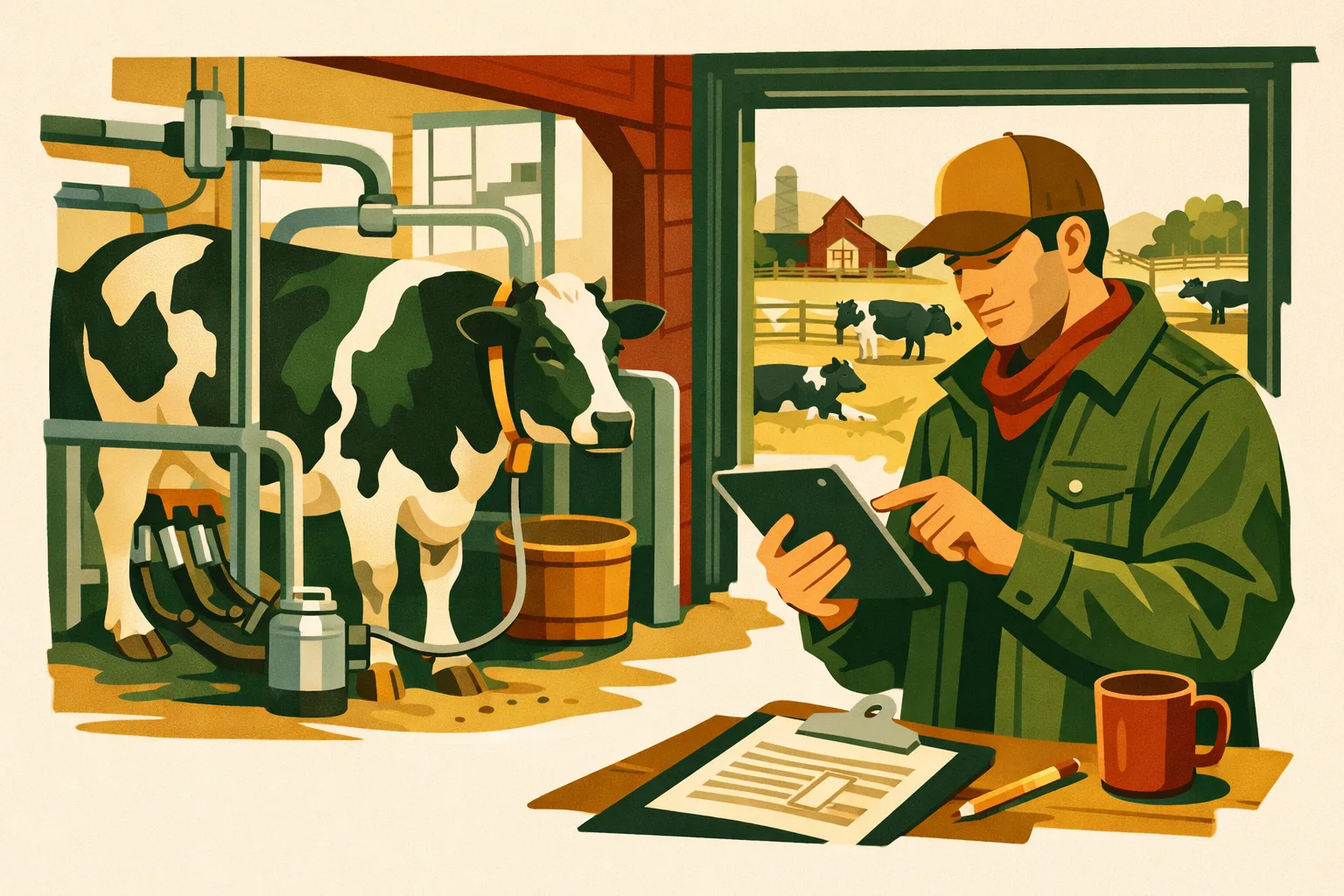
A beef herd can tolerate a lot of delayed paperwork because many decisions happen by season: breeding season, calving season, weaning, preg-check, sale day. Dairy is different. The cow is producing, eating, breeding back, risking mastitis, moving toward dry-off, and showing fresh-cow problems on a daily clock. If those events are not recorded quickly and consistently, you are not just missing history — you are losing the ability to manage tomorrow morning’s milking, treatment list, breeding list, dry-cow pen, and cull decisions.
Dairy herd management depends on a tighter record cycle than most beef operations are used to. Beef producers moving into dairy often keep good identification, calving, vaccination, and breeding records, but skip the records that connect milk production, udder health, fresh-cow performance, and dry-period timing. Those missed details are where dairy profits and losses often show up first.
This guide breaks down the dairy-specific records commercial producers should track, why they matter, how they differ from beef records, and how to set up a practical system that works in the barn, parlor, office, and vet truck.
Why Dairy Herd Management Records Are Different From Beef Records
Beef records are usually built around cow-calf productivity: which cow bred, which cow calved, calf birth weight, weaning weight, health events, and culling. Dairy records include many of those same items, but add a daily production layer.
A dairy cow’s value is not only whether she raises a calf. Her performance is measured by:
- Daily or test-day milk production
- Milk components
- Somatic cell count
- Days in milk
- Reproductive status
- Dry-off timing
- Fresh-cow health
- Mastitis history
- Treatment and milk withdrawal status
- Parlor behavior and milking speed
- Cull risk based on production, fertility, udder health, feet, and metabolic issues
For a beef operation, missing a calving note may create a problem at weaning or preg-check. For a dairy, missing a fresh cow temperature, mastitis treatment, or dry-off date can create a problem tomorrow.
That is the management shift beef producers must make when they transition into dairy: records become operational tools, not just historical reports.
Beef Records vs. Dairy Records: What Changes
| Record Area | Common Beef Operation Focus | Dairy Herd Management Focus | Why It Matters in Dairy |
|---|---|---|---|
| Animal ID | Cow, calf, sire, dam, pasture group | Cow ID, lactation number, pen, parlor string, electronic ID | Dairy cows move through multiple production groups and require daily handling accuracy |
| Calving | Calving date, calf ID, assistance, birth weight | Calving date, fresh date, calf outcome, colostrum, transition risk | Fresh-cow monitoring starts immediately after calving |
| Production | Weaning weight, sale weight | Daily milk, test-day milk, components, lactation curve | Production drives ration, culling, breeding, and cash flow decisions |
| Udder health | Usually limited unless nurse cow issues occur | SCC, clinical mastitis, cultures, quarter history, treatments | Milk quality affects premiums, penalties, treatment decisions, and culling |
| Reproduction | Breeding season, bull exposure, preg-check | Heat events, services, conception, days open, voluntary waiting period | Dairy reproduction is managed continuously |
| Dry period | Often not applicable | Dry-off date, expected calving date, dry treatment, close-up date | Poor dry-period timing affects next lactation and udder health |
| Health | Vaccines, treatments, deaths | Fresh-cow checks, metabolic disease, mastitis, lameness, withdrawals | Health events directly affect milk saleability and cow longevity |
| Culling | Open cows, age, temperament, poor calves | Low production, chronic mastitis, high SCC, feet/legs, fertility, transition disease | Dairy culling decisions need financial and health context |
The 9 Dairy-Specific Records Beef Operators Often Miss
1. Daily or Test-Day Milk Production
Milk production is the core performance record in dairy herd management. Beef producers are used to evaluating a cow by calf performance, body condition, pregnancy status, and longevity. In dairy, production data becomes a daily or monthly decision driver.
At a minimum, track:
- Cow ID
- Date
- Milk weight
- Milking frequency
- Pen or group
- Days in milk
- Lactation number
- Abnormal milking notes, such as kick-off, slow milkout, or incomplete milking
If you are on official milk test, monthly test-day records may include production, components, SCC, and other data. If you are not on test, parlor software, meters, or bulk tank data can still help. Smaller commercial dairies may start with group-level records, then move toward cow-level records as equipment and labor allow.
How Milk Records Change Decisions
Milk records help answer practical questions:
- Which cows are dropping production faster than expected?
- Which fresh cows are not peaking properly?
- Which cows should be bred back aggressively?
- Which cows should not be carried into another lactation?
- Which pen or ration group is underperforming?
- Which cows may have subclinical health issues?
A single low milk day may not mean much. A trend over several milkings does. That is why consistency matters more than perfection.
Practical Time and Cost Estimate
Manual recording from meters or parlor sheets may take 20–45 minutes per milking, depending on herd size and setup. Automated parlor systems reduce manual time but still require someone to review exceptions daily.
Expected costs range from low-cost spreadsheets or herd apps to paid milk testing, meter upgrades, or parlor software. Commercial dairies should budget for both the tool and the labor time to review data. Records that are collected but never reviewed do not improve management.
2. Somatic Cell Count and Udder Health History
Somatic cell count, usually called SCC, is one of the biggest record-keeping differences between beef and dairy. Beef cows can have udder issues, but the financial impact is usually indirect. In dairy, udder health affects milk quality, premiums, treatment costs, dumped milk, labor, and culling.
Track SCC at both the herd and cow level when possible:
- Bulk tank SCC
- Cow-level SCC from test day
- Clinical mastitis cases
- Affected quarter
- Severity score
- Culture results if used
- Treatment given
- Milk withdrawal end date
- Recurrence history
- Culling or dry-off decision
Clinical vs. Subclinical Mastitis Records
Clinical mastitis is visible: abnormal milk, swollen quarter, sick cow, or flakes and clots. Subclinical mastitis may only show through elevated SCC or reduced production.
Both need records. Clinical cases guide treatment and withdrawal decisions. Subclinical records help identify chronic cows that quietly pull down milk quality.
A common mistake for beef operators entering dairy is recording the treatment but not the affected quarter, severity, or recurrence. That makes it hard to know whether a cow had one minor case or a repeated quarter problem that should affect breeding or culling.
What to Record at Treatment Time
For every mastitis event, record:
- Cow ID
- Date detected
- Quarter affected
- Milk appearance
- Cow attitude, appetite, and temperature if sick
- Treatment product
- Dose and route
- Treatment start and stop dates
- Milk withdrawal date and time
- Meat withdrawal date if relevant
- Person who treated
- Outcome: cured, recurred, culled, died, dried off
This is not just paperwork. It protects the milk tank and creates a defensible treatment history if there is a residue question.
3. Dry-Off Dates and Dry Cow Protocols
Dry-off is one of the dairy records beef producers commonly underestimate. In beef, a cow weans a calf and moves into a different management phase, but there is not usually a formal dry-period medical and production protocol. In dairy, dry-off is a planned event tied to the next lactation.
Track:
- Last milking date
- Dry-off date
- Expected calving date
- Days dry target
- Dry cow treatment used
- Internal teat sealant if used
- Quarter notes
- Body condition score
- Pen move date
- Close-up pen date
- Special instructions
Why Dry-Off Records Matter
Dry-off records affect:
- Udder health in the next lactation
- Calving preparation
- Transition ration management
- Vaccination timing
- Pen space planning
- Labor scheduling
- Treatment and withdrawal compliance
- Cull decisions before investing in another lactation
If dry-off dates are not tracked, cows can stay milking too long, dry off too late, or be missed for dry cow treatment. That creates avoidable stress on both the cow and the crew.
Practical Dry-Off Workflow
A workable weekly dry-off process looks like this:
- Review cows due to calve in the next 45–70 days, depending on your farm protocol.
- Confirm pregnancy and expected calving date.
- Check current production and SCC history.
- Decide whether the cow is a normal dry-off, high-SCC dry-off, cull candidate, or special case.
- Record dry treatment, teat sealant, and withdrawal information.
- Move the cow to the dry group.
- Schedule close-up pen move.
- Flag cows needing special attention at calving.
The key is that dry-off should not be handled only from memory or a whiteboard that gets erased.
4. Fresh Cow Checks
Fresh cow records are a major adjustment for beef producers. Beef cows are usually observed closely at calving and then monitored for mothering, calf vigor, and postpartum problems. Dairy fresh cows need a more formal check because early lactation problems can quickly reduce production and fertility.
Track fresh cow checks for the first 3–14 days after calving, depending on your operation and veterinarian’s protocol.
Common fresh cow records include:
- Calving date
- Calving difficulty
- Twins or stillbirth
- Retained placenta
- Temperature
- Appetite
- Rumen fill
- Manure consistency
- Ketosis test result if used
- Displaced abomasum suspicion
- Metritis signs
- Milk production start
- Udder edema
- Treatment or follow-up plan
- Cleared from fresh group date
What Fresh Cow Records Catch
Fresh-cow monitoring helps identify:
- Metritis
- Ketosis
- Milk fever
- Retained placenta
- Displaced abomasum
- Poor appetite
- Mastitis
- Lameness after calving
- Cows that fail to start lactation normally
A cow that looks “a little off” may be easy to miss in a busy barn. A structured fresh-cow list forces the crew to check the same cows, the same way, every day.
Time Estimate for Fresh Cow Checks
Plan for 1–3 minutes per fresh cow for basic observation and recording. More detailed checks involving temperature, ketone testing, or veterinary examination take longer.
For a herd with 10 fresh cows in the monitored group, that may be 15–30 minutes per day. For larger herds, fresh-cow checks may require a dedicated employee or scheduled herd-health block.
5. Days in Milk and Lactation Stage
Days in milk, or DIM, is one of the simplest records with one of the biggest management uses. DIM counts the number of days since a cow calved.
Beef producers often think in terms of calf age. Dairy producers think in terms of lactation stage:
- Fresh cows
- Peak milk cows
- Breeding eligible cows
- Confirmed pregnant cows
- Late-lactation cows
- Dry-off candidates
- Close-up cows
Track:
- Fresh date
- Current DIM
- Lactation number
- Pen or group
- Breeding eligibility
- Pregnancy status
- Dry-off target
How DIM Drives Daily Lists
DIM determines who should be on specific worklists:
- Fresh check list
- First-service breeding list
- Pregnancy check list
- Open cow review list
- Dry-off list
- Late-lactation cull review list
Without DIM, the herd becomes a collection of cows rather than a flow of animals through a production cycle. Dairy management works best when you know where every cow is in that cycle.
6. Milk Components and Quality Data
Milk volume matters, but it is not the whole picture. Components such as butterfat and protein affect milk value and can also indicate feeding or health issues.
Track when available:
- Butterfat percentage
- Protein percentage
- Milk urea nitrogen if used
- Component trends by group
- Bulk tank quality results
- Freezing point or other processor quality notes
- Standard plate count or bacteria counts if reported
- Preliminary incubation count if used
Why Components Belong in Herd Records
Components can help evaluate ration performance and cow health. For example, shifts in butterfat may point to feeding consistency, effective fiber, or rumen function concerns. Protein trends may reflect energy balance, genetics, stage of lactation, and nutrition.
Work with your nutritionist and veterinarian to interpret component data. The record-keeping point is simple: do not leave this information only on milk check statements or processor reports. Tie it back to dates, ration changes, pen moves, weather stress, and herd events.
7. Continuous Breeding and Reproductive Status
Beef herds often use a defined breeding season. Dairy herds commonly breed year-round, which means reproductive records must stay current every week.
Track:
- Voluntary waiting period by farm protocol
- Heat observations
- Activity alerts if used
- Service date
- Service sire or semen code
- Technician or breeder
- Breeding method
- Pregnancy check date
- Pregnancy result
- Recheck date
- Open cow status
- Abortion or pregnancy loss
- Do-not-breed status
- Reproductive cull reason
Dairy Reproduction Is a Moving List
In dairy, reproductive management depends on accurate lists:
- Cows eligible to breed
- Cows bred and waiting for preg-check
- Open cows needing action
- Pregnant cows due for dry-off
- Cows not worth breeding again
- Cows with repeated services
Beef producers entering dairy sometimes record the breeding event but fail to manage the follow-up list. That leads to cows staying open too long or getting bred when they should have been culled.
Practical Review Schedule
A simple dairy reproduction review schedule:
- Daily: enter heats, breedings, and do-not-breed decisions.
- Weekly: review eligible cows, open cows, and cows due for pregnancy diagnosis.
- Monthly: review conception problems, repeat breeders, and cull candidates with the vet or reproductive advisor.
The record must produce action. If it does not create a breeding list, preg-check list, or cull list, the system is not finished.
8. Treatment, Withdrawal, and Milk Tank Safety Records
All livestock operations need treatment records. Dairy operations carry an added risk: treated milk can enter the tank if withdrawal records are unclear.
Track every treatment with:
- Cow ID
- Date and time
- Diagnosis or reason
- Product name
- Lot number if required by your protocol
- Dose
- Route
- Person administering treatment
- Meat withdrawal
- Milk withdrawal
- Date and time milk is safe
- Treated pen or marking method
- Verification before returning milk to tank
Why Beef Treatment Habits May Not Be Enough
Beef producers are used to meat withdrawal compliance. Dairy adds milk withdrawal, and the timing may depend on product, dose, route, duration, and label or veterinary direction.
A cow treated at 5 p.m. may not simply be “good in three days” unless the safe date and time are clearly recorded. Crew members need to know which milk to dump at every milking.
Practical Milk Withholding Controls
Use multiple controls:
- Record the treatment immediately.
- Mark the cow physically according to farm protocol.
- Add her to the treated cow list.
- Confirm the milk withdrawal end date and time.
- Use a parlor alert or written milk-withhold list.
- Require a second check before milk returns to the tank.
This is an area where record accuracy protects the entire farm.
9. Culling Reasons Connected to Production, Health, and Fertility
Beef culling decisions often focus on open cows, poor calves, age, disposition, structural problems, or drought management. Dairy culling should include those factors plus production, SCC, mastitis history, reproduction, and transition disease.
Track culling with specific reasons:
- Low production
- Chronic high SCC
- Repeated mastitis
- Failed reproduction
- Lameness
- Injury
- Poor fresh-cow recovery
- Metabolic disease history
- Age
- Disposition
- Sold for dairy
- Sold for beef
- Died or euthanized
Avoid vague entries such as “bad cow” or “sold.” Those records do not help you improve herd performance.
Cull Records Should Answer Management Questions
Good cull records help answer:
- Are we losing too many cows after freshening?
- Are high-SCC cows staying too long?
- Are lameness issues concentrated in one pen?
- Are first-lactation cows leaving too early?
- Are cows being culled before paying back rearing or purchase cost?
- Are reproductive culls tied to missed heats or poor conception?
Culling is not only a sale decision. It is feedback on the whole dairy system.
The Transition Problem: Beef Operators Usually Track Events, Dairy Operators Track Flow
The biggest record-keeping difference is not one specific field. It is the way the system works.
Beef operators often track major events:
- Calved
- Bred
- Pregnant
- Vaccinated
- Weaned
- Treated
- Sold
Dairy operators track flow:
- Freshened
- Monitored
- Peaked
- Bred
- Checked
- Confirmed pregnant
- Dried off
- Moved close-up
- Freshened again
Every cow is always moving toward the next decision. Records must keep that movement visible.
Practical Checklist: Dairy Records to Set Up Before You Milk the First Cow
Use this checklist before moving from beef into dairy, expanding a dairy, or cleaning up a weak record system.
Animal and Identification Setup
- Assign every cow a permanent visible ID.
- Match ear tag, electronic ID, tattoo, and registration if used.
- Record birth date or estimated age.
- Record breed or cross.
- Record source herd if purchased.
- Record lactation number.
- Record current pen or group.
Production Records
- Decide whether you will record milk daily, by milking, or by test day.
- Set up a process for entering milk weights.
- Record fresh date so DIM calculates correctly.
- Track production by cow and group.
- Review low-production exceptions weekly.
- Save processor and milk test reports with dates.
Udder Health Records
- Record bulk tank SCC reports.
- Record cow-level SCC when available.
- Create a mastitis event form or app workflow.
- Include quarter, severity, treatment, and outcome.
- Track repeat cases.
- Review chronic high-SCC cows before breeding or dry-off.
Fresh Cow Records
- Create a fresh-cow list from calving records.
- Define how many days cows stay on the check list.
- Decide what will be checked: temperature, appetite, manure, ketones, metritis, milk start.
- Record every abnormal finding.
- Schedule follow-up checks.
- Document when cows leave fresh monitoring.
Reproduction Records
- Set the voluntary waiting period.
- Record heats and services daily.
- Record semen or sire.
- Schedule pregnancy diagnosis.
- Create open cow and repeat breeder lists.
- Mark do-not-breed cows clearly.
Dry Cow Records
- Record expected calving date.
- Generate a dry-off list weekly.
- Record dry treatment and teat sealant.
- Track dry pen and close-up pen moves.
- Flag high-SCC or special-care cows.
- Confirm withdrawal compliance.
Treatment and Withdrawal Records
- Record every treatment immediately.
- Include product, dose, route, date, time, and person.
- Record milk and meat withdrawal.
- Maintain a treated cow list visible to milkers.
- Verify before milk returns to the tank.
- Keep records accessible for vet and regulatory review.
Culling and Death Loss Records
- Record exact cull reason.
- Link cull reason to production, SCC, fertility, or health history.
- Separate sold, died, and euthanized outcomes.
- Review culls monthly or quarterly.
- Use the review to adjust protocols.
How Often Should Dairy Records Be Reviewed?
Collecting records is only half the job. Commercial dairies need a review rhythm.
Daily Review
Daily records should support immediate labor decisions.
Review:
- Fresh cow list
- Treated cow and milk-withhold list
- Sick cows
- Calvings
- Cows to breed
- Cows with abnormal milk
- Pen moves
- Parlor alerts or incomplete milkings
Time estimate: 15–45 minutes per day for small to mid-sized herds, more for large herds or multi-site dairies.
Weekly Review
Weekly records should support management planning.
Review:
- Dry-off list
- Pregnancy check list
- Open cows
- Repeat mastitis cases
- Low-production cows
- Pen counts
- Upcoming close-up cows
- Vet check list
- Cows needing hoof trim or lameness follow-up
Time estimate: 30–90 minutes per week, depending on herd size and whether the vet or nutritionist is involved.
Monthly Review
Monthly records should support bigger decisions.
Review:
- Milk production trends
- SCC trends
- Component trends
- Cull reasons
- Reproductive performance
- Fresh-cow disease patterns
- Death loss
- Treatment costs
- Labor bottlenecks
- Protocol compliance
Time estimate: 1–3 hours per month. This is usually best done with the owner, herd manager, veterinarian, nutritionist, and key employees when possible.
Common Record-Keeping Mistakes When Beef Producers Move Into Dairy
Relying Too Much on Memory
In a beef herd, the owner or manager may know most cows by sight and remember key details. Dairy work involves more daily events, more employees, and more treatment risk. Memory breaks down quickly.
If a cow is treated, bred, dried off, or checked fresh, it needs to be recorded the same day.
Recording the Event but Not the Outcome
A record that says “mastitis treated” is incomplete. The outcome matters.
Did she cure? Did it recur? Was she cultured? Did she enter the tank safely? Was she later culled?
The same applies to fresh-cow checks, breeding, lameness, and dry-off.
Keeping Milk Quality Data Separate From Cow Records
Processor reports and milk test sheets often sit in a folder or email inbox. They need to connect with cow events, pen changes, treatments, and culling decisions.
A high-SCC cow should not be evaluated only at dry-off. Her record should follow her through breeding, treatment, and future lactations.
Not Training Milkers on Record Accuracy
Milkers are often the first people to see mastitis, abnormal milk, injury, or poor milkout. If the recording system is only used by the owner or office, critical information arrives late or not at all.
Train milkers to report:
- Abnormal milk
- Kicked units
- Bloody milk
- Swollen quarters
- Off-feed appearance
- Lameness
- Treated cow identification problems
- Parlor equipment issues
Using Too Many Places to Record the Same Thing
Whiteboards, notebooks, spreadsheets, app entries, parlor notes, and vet sheets can all be useful. They can also create confusion if no one knows which record is official.
Pick one primary record system. Temporary notes are fine, but they must be entered into the official system quickly.
Building a Dairy Record System That Works in the Barn
A good dairy record system must be fast enough for barn use and detailed enough for management.
Step 1: Define the Official Record
Decide where the permanent record lives. That may be herd management software, an app, or another structured system.
Temporary tools can support the process:
- Parlor whiteboard
- Treated cow board
- Fresh cow clipboard
- Vet check sheet
- Dry-off list
But the official record should be clear.
Step 2: Standardize Event Names
Use consistent categories. For example:
- Clinical mastitis
- High SCC
- Metritis
- Ketosis
- Milk fever
- Lameness
- Retained placenta
- Dry-off
- Fresh check
- Bred
- Pregnant
- Open
- Do not breed
- Culled
Consistent categories make reports useful. If one employee writes “udder,” another writes “mastitis,” and another writes “bad quarter,” your records become hard to analyze.
Step 3: Record the Minimum Useful Detail
Do not create a system so complicated that employees avoid it. For most dairy events, the minimum useful detail is:
- Cow ID
- Date
- Event
- Details needed for decision-making
- Treatment or action
- Follow-up date
- Person responsible
For treatments, add milk and meat withdrawal.
Step 4: Create Daily Worklists
The record system should generate practical lists:
- Cows to check
- Cows to treat
- Cows withholding milk
- Cows to breed
- Cows for pregnancy diagnosis
- Cows to dry off
- Cows due to calve
- Cows to cull or review
If records do not turn into lists, employees will go back to memory and guesswork.
Step 5: Review Exceptions, Not Every Number
Managers do not need to study every cow every day. Start with exceptions:
- Fresh cows with abnormal checks
- Cows down sharply in milk
- Cows with repeated mastitis
- Cows past breeding target
- Cows nearing dry-off
- Cows missing pregnancy checks
- Treated cows near withdrawal completion
- High-SCC cows
Exception-based management saves time and keeps attention on cows needing action.
Cost and Labor Planning for Better Dairy Records
A record system has real costs, but poor records are not free. Missed treatments, residue risks, delayed breeding, chronic mastitis, and late dry-offs all carry operational cost.
Low-Cost Setup
A low-cost system may use:
- Herd management app
- Printed daily lists
- Whiteboard for temporary parlor notes
- Processor reports saved by date
- Standard paper forms for vet and treatment events
Estimated setup time: 4–8 hours to design categories, enter animals, and train employees.
Ongoing labor: 15–60 minutes per day, depending on herd size and how much data is automated.
Mid-Level Setup
A mid-level system may include:
- App or software with mobile entry
- Cow-level production imports or regular test-day data
- Electronic ID
- Structured treatment and withdrawal tracking
- Weekly reports for vet and reproduction work
Estimated setup time: 1–3 weeks, including cleanup of animal IDs and historical records.
Ongoing labor: 30–90 minutes per day across employees, office staff, and managers, with more value gained from weekly review.
Advanced Setup
An advanced system may connect:
- Parlor data
- Activity monitors
- Milk meters
- Cow-level SCC testing
- Automated sort gates
- Feed and pen data
- Financial records
Estimated setup time: several weeks to several months, depending on integrations and herd size.
Ongoing labor may shift from manual entry to data review, exception handling, and protocol compliance.
Records Your Veterinarian and Nutritionist Need
Dairy herd management is a team process. Your veterinarian, nutritionist, hoof trimmer, breeder, and employees all make better decisions when records are clean.
Veterinarian
Your vet needs:
- Fresh-cow disease records
- Mastitis cases and treatment outcomes
- Culture results
- Reproductive status
- Pregnancy check lists
- Treatment protocols
- Drug usage records
- Death loss and cull reasons
- Vaccination records
Nutritionist
Your nutritionist needs:
- Milk production by group
- Components
- DIM by pen
- Fresh-cow performance
- Body condition trends
- Manure observations
- Health events linked to ration changes
- Pen move dates
- Dry cow and close-up group records
Hoof Trimmer
Your hoof trimmer needs:
- Lameness events
- Lesion type
- Cow ID and foot affected
- Treatment applied
- Recheck date
- Pen or housing location
- Recurring cases
When each advisor sees only part of the picture, recommendations become weaker. Strong records connect the cow, the event, the pen, and the date.
A Practical 30-Day Plan to Upgrade Dairy Herd Records
If your operation is moving from beef into dairy or cleaning up a dairy record system, do not try to fix everything at once. Use a 30-day plan.
Days 1–7: Clean Up Cow Identification
- Verify every cow has a readable ID.
- Match physical ID to digital records.
- Record lactation number and fresh date.
- Identify missing pregnancy statuses.
- Create current pen lists.
- Mark treated or do-not-breed cows clearly.
Days 8–14: Build Critical Daily Lists
- Fresh cow list
- Treated cow and milk-withhold list
- Breeding eligible list
- Pregnancy check list
- Dry-off candidate list
- Sick cow list
Train employees on where the list is located and how it is updated.
Days 15–21: Standardize Health and Treatment Entry
- Create event categories.
- Define mastitis severity scoring.
- Standardize treatment fields.
- Require milk withdrawal date and time.
- Record outcomes for treated cows.
- Review records with your veterinarian.
Days 22–30: Add Production and Quality Review
- Enter or import milk production data.
- Attach SCC and component reports.
- Review high-SCC cows.
- Review low-production cows.
- Compare production by pen or lactation group.
- Set a monthly review meeting.
By day 30, the goal is not a perfect database. The goal is a working system that produces reliable daily lists and captures the dairy-specific events that drive management.
How HerdFlo Helps
HerdFlo gives commercial livestock producers a simple way to keep herd records organized without relying on scattered notebooks, whiteboards, and memory. For dairy herd management, you can use HerdFlo to track cow IDs, calving and fresh dates, breeding records, health events, treatments, dry-off dates, culling reasons, and follow-up tasks in one place.
That matters when your dairy records need to produce action lists: cows to check fresh, cows to breed, cows to preg-check, cows to dry off, cows under treatment, and cows that should not return milk to the tank until withdrawal is complete.
Use the free HerdFlo app at herdflo.com to start tracking dairy herd records more consistently. If you also want full-operation records beyond the herd — equipment, labor, expenses, inventory, and whole-farm management — connect your herd records with FarmsFlo at farmsflo.com.