Cattle Purchase Records: What to Document When You Buy Stocker Cattle
Stocker cattle operations need specific purchase records at receiving — health history, origin documentation, brand inspection, and interstate health.
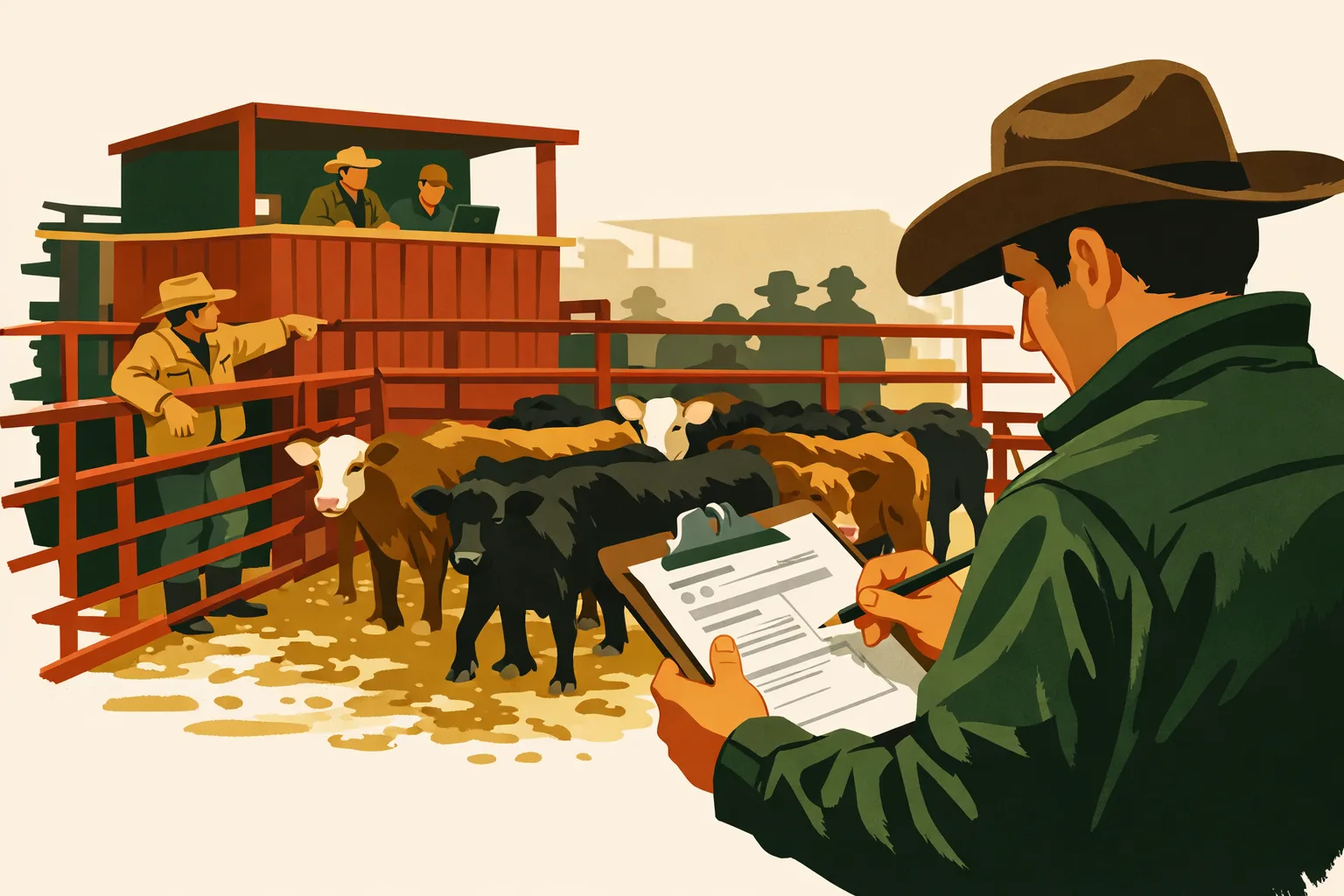
A load of stocker cattle can look profitable on sale day and still cost you money if the paperwork is thin. The cattle may be healthy, the price may be right, and the delivery may be smooth—but if you cannot prove origin, verify health status, document treatment history, or calculate true cost basis, you are managing blind from the first day they step off the trailer.
For stocker and backgrounding operations, cattle record keeping starts before the calves are unloaded. Purchase records are not just office paperwork. They affect receiving protocols, death loss tracking, treatment decisions, shrink calculations, marketing claims, tax reporting, lender conversations, and your ability to defend ownership if there is ever a dispute.
This guide covers the purchase records that matter most when buying stocker cattle: health history, brand inspection, interstate health certificates, origin, seller information, identification, weights, and cost basis.
Why Purchase Records Matter in Stocker and Backgrounding Operations
Stocker cattle move through multiple hands more often than seedstock or closed-herd commercial cows. A calf may move from a ranch to an auction barn, then to an order buyer, then to a backgrounding yard, then to grass, then to a feedyard. Every move adds risk.
Good purchase records help you answer four key questions:
- What did I buy?
- Where did the cattle come from?
- What health risk did they bring with them?
- What do they really cost after freight, shrink, treatments, and death loss?
If you cannot answer those questions by lot, pen, or individual animal, your operation will struggle to measure performance accurately.
Purchase Records Drive Better Receiving Decisions
A group of bawling, high-risk, commingled calves needs a different receiving plan than a uniform load of preconditioned, ranch-direct yearlings. If your records show vaccination dates, weaning status, origin, and transport time, you can sort cattle into the right risk category and manage them accordingly.
That affects:
- Vaccine timing
- Metaphylaxis decisions, where appropriate and under veterinary guidance
- Pen placement
- Feed and water transition
- Pulling intensity
- Labor allocation during the first 30 days
Purchase Records Protect Your Margin
The purchase price is only the starting point. Your true cost basis includes:
- Purchase price
- Commission
- Yardage or sale barn fees
- Freight
- Insurance, if used
- Brand inspection fees
- Health certificate or veterinary fees
- Processing supplies
- Receiving treatments
- Interest
- Death loss allocation
- Shrink adjustment
Without a complete record, you may think a set of cattle made money when they simply had hidden costs sitting outside the animal file.
The Core Purchase Record Every Stocker Operator Needs
Every group of purchased stocker cattle should have a purchase record that ties together the animals, the seller, the legal documents, and the money.
At minimum, your purchase record should include:
- Purchase date
- Delivery or receiving date
- Seller name and contact information
- Buyer or order buyer name, if different
- Sale barn, video sale, ranch-direct source, or private treaty source
- Lot number or invoice number
- Number of head purchased
- Sex class
- Breed or type description
- Color and markings, when relevant
- Average purchase weight
- Total purchase weight
- Purchase price method: per pound, per head, or lot price
- Total purchase amount
- Freight cost
- Brand inspection information, where applicable
- Health certificate information, where applicable
- Origin information
- Identification method
- Initial pen or pasture assignment
- Purchase notes and exceptions
For cattle record keeping, the goal is not to create paperwork for its own sake. The goal is to create a chain of information that follows the cattle from purchase through sale.
Document the Seller and Source
The first piece of the purchase record is the source. “Bought at auction” is not enough for a commercial stocker operation that wants repeatable performance.
Seller Information to Capture
Record the seller or source as specifically as possible:
- Ranch name
- Producer name
- Mailing address
- Phone number
- Email address
- Premises ID, if provided
- Sale barn name
- Auction date
- Order buyer name
- Video sale platform, if used
- Buyer number
- Invoice or settlement number
If cattle are purchased through an order buyer, record both the order buyer and the original source when available. Some loads are assembled from multiple farms or multiple auction barns. That distinction matters.
Why Source Records Matter
Source records help you evaluate future buying decisions. Over time, you can compare sources by:
- Morbidity rate
- Death loss
- Average daily gain
- Treatment cost per head
- Feed efficiency, where tracked
- Re-pull rate
- Rail performance, if retained ownership is used
- Sale weight and sale value
- Net margin per head
If one source consistently produces fewer pulls and better gains, it may justify paying more up front. If another source looks cheap but brings high treatment costs and poor performance, the purchase record will show it.
Record Origin and Movement History
Origin is one of the most valuable pieces of information in stocker cattle record keeping. It affects health risk, traceability, marketing options, and regulatory compliance.
What Counts as Origin Information?
Origin may include:
- Ranch of birth
- State or county of origin
- Previous owner
- Previous backgrounder
- Auction market location
- Commingling points
- Pasture location before sale
- Time since weaning
- Time in transit
- Number of ownership changes, when known
For ranch-direct purchases, the origin record may be straightforward. For auction-sourced cattle, origin may be incomplete. Record what you know and mark what is unknown.
Single-Origin vs. Commingled Cattle
Single-origin cattle generally provide cleaner records. Commingled cattle may carry higher health risk because animals from multiple sources have been mixed before arrival.
That does not mean commingled cattle are always a bad buy. It means your purchase record should identify the risk so you can manage and evaluate the group correctly.
| Purchase Type | Record Strength | Common Health Risk | Record-Keeping Priority | Management Use |
|---|---|---|---|---|
| Ranch-direct, single-origin | High | Usually lower, depending on program | Capture ranch, vaccine history, weaning date, IDs | Build repeat supplier performance history |
| Video sale, described lots | Moderate to high | Varies by verification quality | Save sale description, lot sheet, seller statements | Compare advertised program to actual results |
| Auction barn, single-owner lot | Moderate | Moderate | Record auction, lot number, seller if known | Track morbidity by sale/source |
| Auction barn, commingled | Low to moderate | Often higher | Mark as commingled, record visible condition and processing response | Separate risk class and monitor closely |
| Order-buyer assembled load | Variable | Variable to high | Record each known source, assembly points, shipping details | Evaluate order buyer and load quality |
Health History Records to Request Before Purchase
Health history is one of the most practical purchase records you can collect. It helps you decide what cattle need at receiving and what they may not need repeated too soon.
Vaccination Records
Ask for vaccination documentation that includes:
- Product name
- Disease coverage
- Date administered
- Booster date, if given
- Route of administration
- Dosage
- Lot number, if available
- Expiration date, if available
- Person or veterinarian who administered it
- Whether cattle were vaccinated pre-weaning or at weaning
For stocker cattle, common health records may include vaccination history for respiratory diseases, clostridial diseases, and other regionally appropriate risks. Your veterinarian should guide the specific program for your operation and cattle source.
Avoid relying only on broad phrases such as “had all shots.” That may mean different things to different sellers. Record the actual products and dates whenever possible.
Weaning and Preconditioning Records
For stocker and backgrounding cattle, weaning status is a major management factor.
Record:
- Weaning date
- Number of days weaned before sale
- Whether calves were bunk broke
- Whether calves were water trough trained
- Whether calves were fence-line weaned
- Whether calves were commingled after weaning
- Feed program before sale
- Mineral program, if known
- Preconditioning program name, if applicable
A calf weaned 45 days, bunk broke, and vaccinated with documented boosters is not the same animal as a fresh-weaned calf sold immediately off the cow. Your records should reflect that difference.
Previous Treatments
Request treatment history when available:
- Antibiotics administered
- Anti-inflammatory use
- Dewormers
- Coccidiosis prevention or treatment
- Implant history
- Castration date and method
- Dehorning date and method
- Any known chronic animals
- Any previous respiratory cases
- Any known lameness or injury issues
Previous treatment records matter because they affect withdrawal times, treatment decisions, and marketing eligibility. If you do not know whether an animal has already been treated, you may unintentionally repeat a treatment or miss an unresolved health problem.
Parasite and Deworming History
Ask whether cattle have been dewormed and document:
- Product used
- Date administered
- Route
- Weight basis
- Whether external parasite treatment was included
- Pasture exposure history
Parasite pressure varies by region, season, and previous management. The purchase record gives your veterinarian and management team better context.
Brand Inspection and Proof of Ownership
In many western and plains states, brand inspection is a routine part of cattle movement and ownership transfer. Requirements vary by state, so always follow your state brand authority rules.
What to Record From the Brand Inspection
If brand inspection applies, save and record:
- Brand inspection certificate number
- Inspection date
- Inspector name
- Location of inspection
- Seller name
- Buyer name
- Number of head inspected
- Animal description
- Brands recorded
- Earmarks or other identifying marks
- Destination
- Fees paid
- Any discrepancies noted
Keep a copy of the brand inspection with the purchase file. If cattle are later sold, moved, financed, or involved in an ownership dispute, this documentation can be critical.
Match Brand Documents to the Load
The number of head on the brand inspection should match:
- Invoice
- Bill of sale
- Hauler paperwork
- Receiving head count
- Health certificate, if applicable
If there is a mismatch, document it immediately. For example, if the invoice says 100 head, the brand inspection says 99, and 99 arrive, record the correction and save supporting notes.
Interstate Health Certificate Records
When cattle cross state lines, an interstate certificate of veterinary inspection, commonly called a CVI or health certificate, may be required. Requirements vary by state, class of cattle, disease status, and destination.
What to Capture From the Health Certificate
Record the following:
- CVI number
- Date issued
- Issuing veterinarian
- Veterinary clinic
- Origin address
- Destination address
- Consignor
- Consignee
- Number of head
- Official ID numbers, when required
- Description of cattle
- Test results, if required
- Permit number, if required
- Expiration date or valid movement window
- State-specific statements or certifications
A health certificate is not just a travel document. It is part of your animal movement record and should be tied to the purchase lot.
When to Review Health Certificates
Review the CVI before cattle ship whenever possible. If that is not practical, review it when they arrive.
Check that:
- Head count matches
- Destination is correct
- Dates are valid
- Official IDs match the cattle or group records
- Any required tests or permits are included
- The document is legible and stored
Do not wait until sale time, audit time, or a disease trace to discover that the certificate was missing or incorrect.
Identification Records: Group, Lot, and Individual IDs
Stocker operations vary in how much individual identification they use. Some manage cattle by group and pen. Others use individual EID tags and animal-level records. The right system depends on your scale, labor, market requirements, and management goals.
Minimum ID Records for Purchased Cattle
At minimum, assign every purchase group:
- Purchase lot ID
- Receiving group ID
- Pen or pasture ID
- Source ID
- Arrival date
- Head count
Example:
2026-03-15_OKAUCTION_72HD_STEERS_485AVG
That simple naming structure tells you the date, source, head count, sex, and average weight.
Individual Animal ID Records
If using individual IDs, record:
- Visual tag number
- EID number, if used
- Bangs tag, if present
- Tattoo, if present
- Brand
- Sex
- Color
- Weight
- Source lot
- Pen assignment
- Purchase price allocation
Individual IDs are especially valuable when tracking treatments, pulls, death loss, implants, withdrawals, and sale performance.
When Individual Records Pay Off
Individual records are most useful when:
- Cattle are high-value
- You retain ownership
- You sell into verified programs
- You manage health treatments closely
- You need withdrawal tracking
- You want accurate death loss and treatment cost allocation
- You sort cattle multiple times before sale
Group records can work for simpler systems, but treatment records should still identify the specific animal treated whenever possible.
Receiving Weight, Pay Weight, and Shrink
Weight records can make or break your cost basis. Stocker cattle are commonly bought by weight, and small differences in shrink assumptions can change the economics of a purchase.
Weights to Record
Capture all relevant weights:
- Sale weight
- Pay weight
- Gross weight
- Net weight
- Truck weight, if available
- Arrival weight
- Processing weight
- Re-weigh weight, if applicable
- Pencil shrink used
- Actual shrink, if calculated
Why Pay Weight Is Not Enough
Pay weight tells you what you paid on. Arrival weight tells you what stepped off the trailer. Processing weight tells you what you are managing after receiving stress, fill changes, and transport shrink.
For cost analysis, record all three when available.
Example:
- 80 steers purchased
- Pay weight: 500 lb average
- Arrival weight: 475 lb average
- Purchase price: $X per cwt
- Freight: $Y total
With those records, you can evaluate whether a cheap freight option, long haul, or extended stand time affected your receiving weight and early performance.
Purchase Price and Cost Basis Records
A useful stocker purchase record goes beyond the invoice total. It should build a true cost basis per head and per pound.
Direct Purchase Costs to Record
Record:
- Gross purchase price
- Sale commission
- Yardage
- Insurance
- Beef checkoff, where applicable
- Brand inspection fees
- Health certificate fees
- Veterinary inspection fees
- Freight
- Order buyer commission
- Wire or payment fees
- Miscellaneous sale expenses
Receiving Costs to Add
Receiving costs are not always on the purchase invoice, but they belong in your economic record.
Track:
- Vaccines
- Dewormers
- Implants
- Antibiotics used at processing, if applicable under veterinary guidance
- Tags
- EID buttons
- Labor
- Chute time
- Processing supplies
- Feed during receiving
- Bedding, if used
- Extra hospital labor
Cost Basis Per Head and Per Pound
At a practical level, calculate:
- Purchase cost per head
- Purchase cost per payweight pound
- Landed cost per head
- Landed cost per arrival-weight pound
- Processed cost per head after receiving
- Current cost basis after treatments and death loss
A simple formula:
Landed cost per head = purchase price per head + freight per head + sale expenses per head + inspection/certificate costs per head
Another formula:
Processed cost per head = landed cost per head + receiving health cost per head + receiving labor/supply cost per head
For death loss allocation:
Adjusted cost per remaining head = total group cost ÷ remaining live head
That number can rise quickly after even a few losses, especially in lightweight or high-risk calves.
Bill of Sale, Invoice, and Settlement Records
Do not rely on a bank statement as your purchase record. The invoice or settlement sheet contains details that the payment record does not.
Documents to Save
Keep digital copies of:
- Bill of sale
- Auction invoice
- Settlement statement
- Order buyer invoice
- Freight invoice
- Brand inspection
- Health certificate
- Lot description
- Video sale catalog page
- Preconditioning certificate
- Vaccination sheet
- Any seller guarantees or representations
- Payment confirmation
Key Fields to Verify
Before filing the documents, check:
- Buyer name is correct
- Seller name is correct
- Date is correct
- Head count matches
- Weight matches
- Price matches
- Fees are itemized
- Cattle description matches
- Payment terms are clear
- Any guarantee is written, not just verbal
Verbal claims are hard to use later. If a purchase decision depends on a claim—such as weaning days, vaccination program, or source verification—ask for written documentation.
Transportation and Arrival Records
Transportation records connect the purchase to the receiving event. They also help identify whether problems started before or after arrival.
Hauling Records to Capture
Record:
- Hauler name
- Driver name
- Truck and trailer identification
- Load date and time
- Unload date and time
- Origin location
- Destination location
- Miles hauled
- Stops or transfers
- Weather concerns
- Bedding used, if applicable
- Freight cost
- Head count loaded
- Head count unloaded
- Dead or down animals on arrival
- Injuries on arrival
Arrival Condition Notes
On arrival, record observations while cattle are unloaded and settled:
- General alertness
- Fill condition
- Mud or manure contamination
- Lameness
- Coughing
- Nasal discharge
- Eye issues
- Dehydration signs
- Horned cattle or fresh dehorning
- Bulls or mis-sorted sex class
- Tag discrepancies
- Weak calves
- Dead on arrival
Take photos or short videos if there are problems. Save them with the purchase lot record.
Time and Cost Estimates for Better Purchase Records
Good records require discipline, but the time cost is usually small compared with the value of the information.
Estimated Time Per Purchase Group
For a typical stocker purchase group:
- Create purchase lot record: 5–10 minutes
- Scan or upload documents: 5–15 minutes
- Enter invoice and cost details: 10–20 minutes
- Record health and origin notes: 10–20 minutes
- Match head count and receiving pen: 5–10 minutes
- Enter individual IDs, if used: varies by head count and equipment
For group-level records, expect 30–60 minutes per purchase group if documents are ready. Individual animal records take longer at processing but provide more detail later.
Estimated Record-Keeping Costs
Costs vary by operation, but common direct costs include:
- Visual tags: low per-head cost
- EID tags: higher per-head cost than visual tags
- Tagger and reader equipment, if using EID
- Office labor or manager time
- Software or app subscriptions, if applicable
- Scanning or document storage time
The largest cost is usually not the tool. It is missing information that causes poor treatment decisions, inaccurate margins, or lost market eligibility.
Practical Checklist: What to Document When You Buy Stocker Cattle
Use this checklist for every stocker or backgrounding purchase.
Before Purchase
- Seller or source identified
- Ranch-direct, auction, video, or order-buyer source recorded
- Lot description saved
- Head count confirmed
- Sex class confirmed
- Weight basis understood
- Price basis understood
- Weaning status requested
- Vaccination history requested
- Treatment history requested
- Implant history requested
- Deworming history requested
- Origin information requested
- Brand inspection requirements checked
- Interstate movement requirements checked
- Health certificate requirements checked
- Freight plan and cost estimated
At Purchase
- Invoice or bill of sale collected
- Lot number recorded
- Buyer number recorded
- Seller name recorded
- Purchase date recorded
- Pay weight recorded
- Gross purchase cost recorded
- Fees and commissions recorded
- Written claims saved
- Payment terms documented
Before Shipping
- Health certificate reviewed, if required
- Brand inspection completed, if required
- Head count matched across documents
- Destination verified
- Hauler information recorded
- Load time scheduled
- Receiving pen or pasture assigned
- Receiving crew notified
- Processing supplies ready
At Arrival
- Head count unloaded
- Arrival date and time recorded
- Arrival weight recorded, if available
- Cattle condition noted
- Injuries or dead-on-arrival animals documented
- Photos taken if problems are present
- Pen or pasture assignment recorded
- Water and feed access verified
- Pull-watch schedule started
After Processing
- Processing date recorded
- Vaccines administered recorded
- Dewormers recorded
- Implants recorded
- Tags or EIDs recorded
- Individual treatments recorded
- Withdrawal dates recorded
- Processing labor and supply costs added
- Updated cost basis calculated
- Purchase documents uploaded or filed
Red Flags in Stocker Purchase Records
Thin or inconsistent records do not always mean the cattle are bad, but they should affect how you price and manage the risk.
Watch for Missing Health History
Be cautious when cattle are advertised as preconditioned but no records are provided. Ask for:
- Product names
- Dates
- Booster documentation
- Weaning date
- Program certificate, if applicable
If documentation is unavailable, manage the cattle as higher risk and price them accordingly.
Watch for Head Count Mismatches
A mismatch between invoice, brand inspection, CVI, and actual unloading count should be resolved immediately.
Document:
- Who was contacted
- Date and time
- Corrected count
- Any financial adjustment
- Supporting documents
Watch for Vague Origin Claims
Phrases like “local cattle,” “ranch calves,” or “green cattle” may not provide enough management value. Ask for specifics when possible.
Better records include:
- Ranch name
- County or state
- Whether cattle were commingled
- How long they were assembled before shipping
- Whether they were weaned before sale
Watch for Treatment and Withdrawal Gaps
If previous treatments are unknown, you may have limited information for withdrawal management. Record the gap and consult your veterinarian when deciding treatment protocols.
Organizing Purchase Records by Lot
For stocker and backgrounding operations, lot-based organization usually works well. Even if you also track individual animals, the purchase lot ties everything together.
Suggested Purchase Lot Naming System
Use a consistent structure:
YYYY-MM-DD_SOURCE_HEADCOUNT_CLASS_AVGWEIGHT
Examples:
2026-01-12_BARN12_64_STEERS_5252026-02-03_RANCHDIRECT_120_HEIFERS_6102026-03-18_ORDERBUYER_95_MIXED_475
A consistent naming system helps you find records later and compare performance across groups.
Documents to Attach to Each Lot
Attach or file:
- Invoice
- Bill of sale
- Health certificate
- Brand inspection
- Freight invoice
- Vaccination record
- Weaning or preconditioning certificate
- Arrival notes
- Processing record
- Treatment summary
- Death loss record
- Sale record
When all documents are tied to one lot, you can calculate performance and margin without hunting through emails, glovebox papers, and text messages.
Linking Purchase Records to Health Records
Purchase records become more valuable when they connect directly to health outcomes.
Track by purchase lot:
- Number treated
- First treatment date
- Diagnosis
- Treatment product
- Dose
- Treatment cost
- Withdrawal date
- Re-pulls
- Chronics
- Death loss
- Necropsy findings, if performed
- Veterinary notes
This allows you to compare health outcomes by source, season, weight class, and receiving protocol.
For example, you may find that calves from one auction source require more first treatments but recover well, while another source produces fewer initial pulls but more chronics. That distinction matters when deciding future purchases.
Linking Purchase Records to Performance and Sale Records
Purchase records should follow cattle through the entire stocker phase.
Connect the purchase lot to:
- Starting weight
- Processing weight
- Turnout weight
- Interim weights
- Sale weight
- Days owned
- Average daily gain
- Feed cost
- Pasture cost
- Yardage
- Treatment cost
- Death loss
- Sale price
- Net return
This is where cattle record keeping turns into management intelligence. You can compare groups based on actual results instead of memory.
Questions Your Records Should Answer
At sale time, your records should answer:
- Which purchase source had the best net return?
- Which weight class performed best?
- Did preconditioned cattle justify the premium?
- Did a specific order buyer deliver consistent cattle?
- Which receiving protocol worked best?
- Which purchase month produced the strongest margin?
- How much did freight affect landed cost?
- How much did death loss change cost basis?
- Which cattle should we try to buy again?
If your records cannot answer those questions, your next purchase decision will rely too heavily on guesswork.
Common Mistakes to Avoid
Even experienced cattle operators lose useful information because the purchase record is incomplete or disconnected from the rest of the operation.
Mistake 1: Filing Paper Without Entering Key Data
A scanned invoice is useful, but it is not the same as structured data. You should be able to search and report by:
- Source
- Date
- Head count
- Weight
- Cost
- Lot
- Pen
- Health outcome
Mistake 2: Mixing Multiple Purchases Without Tracking Them
Combining cattle from several purchases may be necessary. If you do, keep the original purchase lot records and document the commingling date.
Record:
- Lots combined
- Head count from each lot
- New pen or group ID
- Reason for combining
- Any health concerns at the time
Mistake 3: Not Updating Cost Basis After Losses
Death loss changes the cost basis of the remaining cattle. If you do not update it, your margin reports will be wrong.
Mistake 4: Not Recording Unknowns
Unknown information is still information. If vaccination history is unavailable, mark it as unknown. Do not leave the field blank in a way that looks like it was overlooked.
Mistake 5: Separating Purchase and Health Records
If the health record lives in one notebook and the purchase record lives in a file cabinet, you lose the ability to evaluate source performance. Tie them together by lot or animal ID.
A Simple Purchase Record Template
Here is a practical structure you can use for each stocker purchase group.
Purchase Details
- Purchase lot ID:
- Purchase date:
- Receiving date:
- Source:
- Seller:
- Order buyer:
- Sale barn or platform:
- Invoice number:
- Head count:
- Class:
- Breed/type:
- Average weight:
- Pay weight:
- Arrival weight:
- Purchase price:
- Total invoice:
- Freight:
- Fees:
- Landed cost per head:
Health and Origin
- Ranch of origin:
- State/county of origin:
- Single-origin or commingled:
- Weaning date:
- Days weaned:
- Vaccination history:
- Deworming history:
- Implant history:
- Previous treatments:
- Known health issues:
- Veterinary documents:
Legal and Movement
- Brand inspection number:
- Brand inspection date:
- CVI number:
- CVI date:
- Permit number:
- Hauler:
- Load time:
- Unload time:
- Destination pen or pasture:
Receiving and Follow-Up
- Processing date:
- Tags applied:
- Products administered:
- Treatment protocol:
- Withdrawal dates:
- First 30-day morbidity:
- Death loss:
- Notes:
How HerdFlo Helps
HerdFlo helps commercial cattle producers keep purchase records connected to the animals and groups they manage every day. Instead of storing invoices in one place, health notes in another, and cost details in a spreadsheet, you can track cattle purchase records, herd health, breeding, calving, treatments, and performance in one system.
For stocker and backgrounding operations, HerdFlo can help you:
- Create purchase groups by source, date, and lot
- Record seller, origin, head count, weights, and cost details
- Attach key documents such as invoices, health certificates, and brand inspections
- Track receiving treatments and withdrawal dates
- Connect purchase records to health outcomes and death loss
- Keep cattle record keeping organized from arrival through sale
Use the free HerdFlo app at herdflo.com to start tracking purchase and herd records automatically. If you also need full-operation records beyond livestock—equipment, expenses, tasks, and broader farm management—use FarmsFlo at farmsflo.com.