Livestock Vaccination Schedule by Species: A Field Checklist for Cattle, Goats, and Sheep
A practical vaccination schedule for cattle, goats, and sheep — what to give, when to give it, and the records you need to keep for BQA and state compliance.
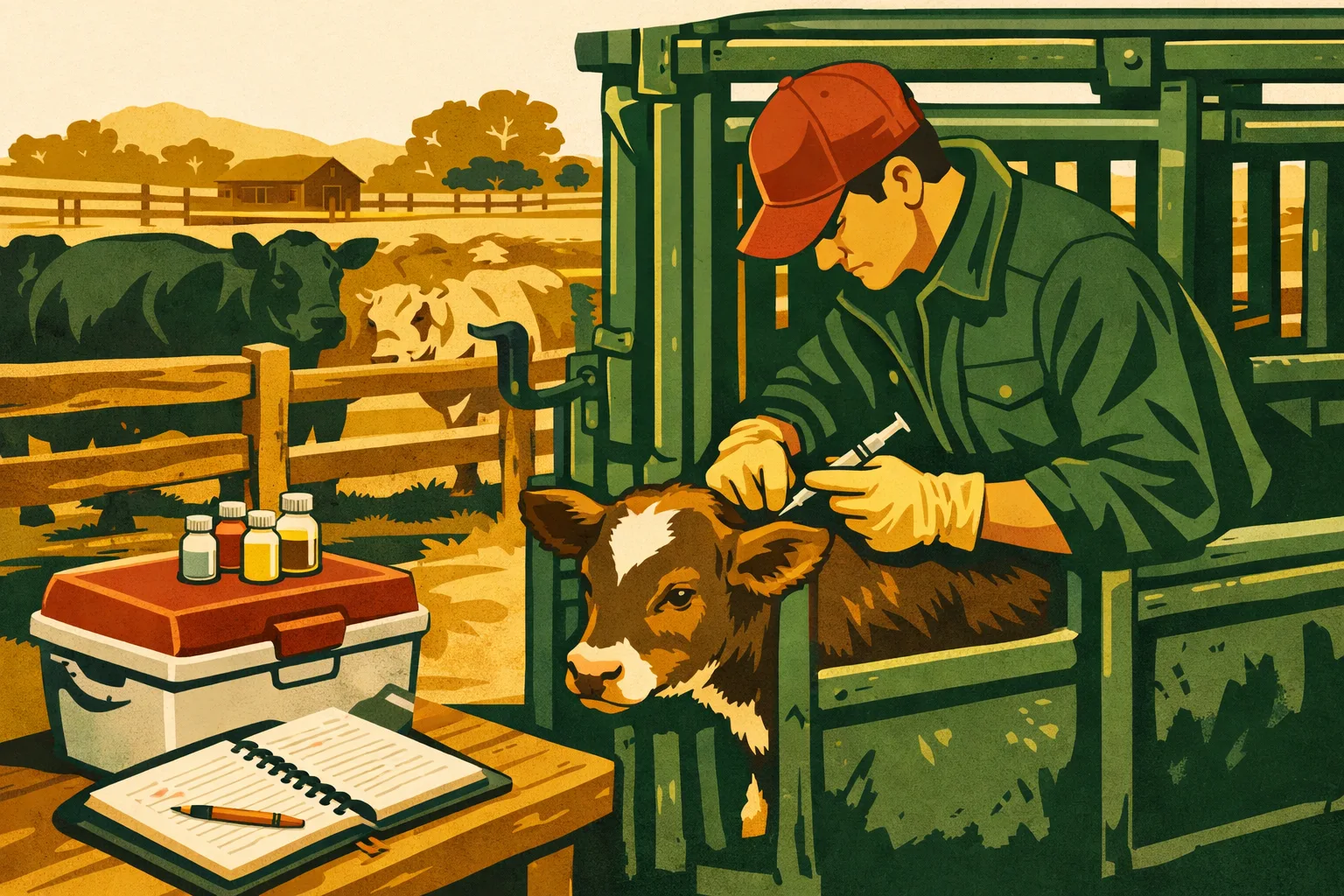
A missed booster, expired product, or undocumented treatment can turn into real money lost: open cows, weak newborns, respiratory pulls, rejected sale animals, or a failed audit trail when you need proof of care. Vaccination programs work best when they are scheduled around production events—not when everyone remembers “sometime this spring.” A solid livestock vaccination schedule gives your crew a repeatable plan for what to give, when to give it, and what to record every time an animal is handled.
This guide breaks vaccination timing down by species for commercial cattle, goat, and sheep operations. Use it as a field checklist, then tailor it with your herd veterinarian based on disease pressure, geography, marketing plan, product labels, and your animals’ health history.
Build the Schedule Around the Production Calendar
A vaccination program should be tied to predictable handling points: birth, tagging, castration, weaning, pre-breeding, pregnancy checking, and pre-calving or pre-lambing/kidding. If you build the schedule around work you already do, compliance goes up and labor costs go down.
For Beef Quality Assurance (BQA) and general herd-health compliance, your records need to show more than “vaccinated.” They should prove:
- Which animal or group received the vaccine
- Product name and disease coverage
- Lot number and expiration date
- Dose given
- Route and injection site
- Date administered
- Person administering
- Booster due date
- Withdrawal period, if applicable
- Adverse reactions or missed animals
Even when a vaccine has no slaughter withdrawal, record it. Buyers, veterinarians, auditors, and your future self all benefit from a clean paper trail.
Core Principles Before You Pick Products
Work Under a Veterinarian-Client-Patient Relationship
Your veterinarian should help select products, timing, and risk-based add-ons. This is especially true for goats and sheep because fewer vaccines are labeled specifically for goats, and extra-label use requires veterinary oversight.
A herd vet can help answer:
- Is modified-live vaccine appropriate for this group?
- Are pregnant animals eligible for this product?
- Is clostridial coverage adequate for your region?
- Do you need abortion, footrot, pneumonia, pinkeye, or rabies coverage?
- Are prior vaccine records strong enough to use certain breeding protocols?
- Are booster intervals being missed?
Match Vaccine Type to the Group
Vaccines generally fall into two broad categories:
Modified-live vaccines often provide strong immunity but may carry restrictions for pregnant animals or calves/kids/lambs nursing pregnant dams, depending on label and prior vaccination status.
Killed vaccines are often considered safer in pregnant animals but usually require proper initial boosters and may produce shorter duration of immunity.
Never assume two products with similar disease names can be used the same way. Read the label every time.
Respect Timing and Boosters
Many vaccination failures are not true product failures. Common causes include:
- No booster given after the initial dose
- Vaccinating too close to shipping or weaning stress
- Using expired product
- Poor refrigeration
- Wrong route or dose
- Dirty syringes or chemical disinfectant residue
- Vaccinating sick or heavily parasitized animals
- Failing to separate vaccinated from unvaccinated groups in records
For planning purposes, schedule most vaccines at least 2–4 weeks before expected disease exposure, shipping, breeding, or birthing.
Species-by-Species Livestock Vaccination Schedule Comparison
The table below gives a practical comparison of common timing windows. It is not a substitute for label directions or veterinary guidance, but it gives a strong framework for a commercial livestock vaccination schedule.
| Species | Production Stage | Common Core Vaccines | Risk-Based Add-Ons | Typical Timing |
|---|---|---|---|---|
| Cattle | Calves | Clostridial 7- or 8-way; respiratory viral complex depending on program | Mannheimia, Pasteurella, Histophilus, pinkeye | Branding/turnout, pre-weaning, booster before weaning or shipping |
| Cattle | Breeding cows/heifers | IBR, BVD Type 1 & 2, PI3, BRSV; Lepto; Campylobacter/Vibrio where needed | Scours vaccines, anthrax in endemic areas | 30–60 days pre-breeding; 6–8 weeks pre-calving for scours products |
| Cattle | Bulls | Same reproductive/respiratory coverage as breeding females | Trich testing is not a vaccine but often scheduled with breeding soundness exams | 30–60 days before turnout |
| Goats | Kids | CD&T | Pneumonia, sore mouth, rabies, CL where indicated | 6–8 weeks old, booster 3–4 weeks later; earlier if dams unvaccinated per vet guidance |
| Goats | Does/Bucks | CD&T | Rabies, pneumonia, sore mouth, CL in problem herds | Annual booster; does 4–6 weeks before kidding |
| Sheep | Lambs | CD&T | Sore mouth, footrot, abortion vaccines, pneumonia, rabies, CL where indicated | 6–8 weeks old, booster 3–4 weeks later; ewes 4–6 weeks before lambing |
| Sheep | Ewes/Rams | CD&T | Campylobacter/Chlamydia abortion vaccines, footrot, sore mouth | Pre-breeding or pre-lambing depending on product |
Cattle Vaccination Schedule
Cattle programs vary by region, class of cattle, sale channel, and whether you retain ownership. A cow-calf operation selling weaned calves has different vaccine priorities than a stocker operation buying high-risk calves.
Birth to Branding: Set the Foundation
At birth, sanitation, colostrum, identification, and accurate records matter as much as vaccination. Most vaccine programs begin when calves are old enough to respond well and are already being processed.
Common early-life practices include:
- Calf ID and dam link
- Birth date or approximate age
- Calving ease score
- Colostrum concern notes
- Navel care if part of the ranch protocol
- Castration and dehorning records
- Clostridial vaccination at branding or early processing
Common vaccines at branding or early processing:
- Clostridial 7-way or 8-way
- Respiratory viral vaccine if part of the ranch program
- Mannheimia/Pasteurella products for higher-risk calves
- Pinkeye vaccine if history and region justify it
Timing: Many ranches process calves at 2–4 months of age. If the product requires a booster, schedule it before weaning rather than assuming one dose is enough.
Pre-Weaning: Reduce Stress-Related Disease
Pre-weaning vaccination is one of the most valuable points in a cattle vaccination schedule because it prepares calves before the stress of weaning, commingling, hauling, and ration change.
A typical pre-weaning protocol may include:
- IBR
- BVD Type 1 and Type 2
- PI3
- BRSV
- Clostridial booster
- Mannheimia/Pasteurella/Histophilus coverage where risk is high
Timing: Administer vaccines 2–4 weeks before weaning when possible. This gives the immune system time to respond before calves face their highest stress period.
Records to capture:
- Group name, pasture, or lot
- Individual IDs if calves are managed individually
- Product name and lot
- Booster due date
- Weaning date target
- Any calves missed due to sickness, size, or handling issues
Weaning and Backgrounding: Do Not Overload the Worst Day
Weaning day is already stressful. If calves were not vaccinated before weaning, vaccinating at weaning is better than doing nothing, but it is not ideal. Build your schedule so the main immune response starts before stress.
At weaning, record:
- Weight
- Body condition or frame notes if used
- Castration status
- Dehorn status
- Vaccine history
- Treatments given
- Pulls or health concerns
- Pen or pasture assignment
If you sell value-added or preconditioned calves, accurate vaccine records can support marketing claims. Many programs require documented dates, boosters, and products.
Replacement Heifers: Protect Fertility Before Breeding
Replacement heifers need reproductive protection before breeding. The goal is to reduce fetal loss, infertility, and disease transmission.
Common breeding heifer coverage may include:
- IBR
- BVD Type 1 and Type 2
- PI3
- BRSV
- Leptospirosis, often 5-way Lepto depending on product
- Campylobacter fetus, commonly called Vibrio, where indicated
- Clostridial booster if due
Timing: Schedule pre-breeding vaccines 30–60 days before bull turnout or AI. If using modified-live products, follow label restrictions carefully. Many modified-live reproductive vaccines require prior vaccination before use in pregnant animals or around breeding.
Records to capture:
- Heifer ID
- Age and weight
- Breeding group
- Vaccine product and lot
- Route and injection site
- Bull or AI exposure date
- Booster requirement
- Pregnancy check result later in the season
Mature Cows: Annual Reproductive and Herd Protection
Mature cow vaccination is usually built around pre-breeding and pre-calving handling.
Pre-breeding cow vaccines may include:
- IBR
- BVD Type 1 and Type 2
- PI3
- BRSV
- Leptospirosis
- Vibrio where risk exists
- Clostridial booster depending on product history and risk
Pre-calving cow vaccines may include:
- Scours vaccines targeting calf diarrhea pathogens where the herd has a history or risk
- Clostridial booster if aligned with annual program
- Other region-specific products directed by the veterinarian
Timing: Scours vaccines are often given several weeks before calving to improve antibody levels in colostrum. Follow product label timing exactly because first-time vaccinates may need two doses.
Bulls: Do Not Skip the Breeding Battery
Bulls should be on the same reproductive disease prevention plan as the cow herd. Vaccinate bulls well before turnout, ideally at the same time as breeding soundness exams.
Typical bull protocol may include:
- IBR
- BVD Type 1 and Type 2
- PI3
- BRSV
- Leptospirosis
- Vibrio where indicated
- Clostridial booster
Also record:
- Breeding soundness exam result
- Trichomoniasis test if required or recommended
- Body condition
- Foot and leg notes
- Turnout pasture
- Cow group assigned
Goat Vaccination Schedule
Goat vaccine programs must be practical and carefully documented because product labeling is more limited than in cattle. Work closely with your veterinarian, especially for meat goat herds, dairy goats, show-sale animals, or operations with abortion or pneumonia history.
Core Goat Vaccine: CD&T
The most common core vaccine for goats is CD&T, which helps protect against:
- Clostridium perfringens type C
- Clostridium perfringens type D
- Clostridium tetani
This is the backbone of most goat vaccination programs.
Kids: Early Protection and Booster Discipline
Kids are commonly started on CD&T at 6–8 weeks of age, followed by a booster 3–4 weeks later. If does were not vaccinated before kidding, your veterinarian may recommend an adjusted schedule.
A practical kid schedule:
-
Birth
- Record kid ID, dam ID, birth type, birth weight if used, and colostrum status.
- Dip navel if part of protocol.
- Note weak kids or assisted births.
-
6–8 weeks
- Give first CD&T.
- Record product, lot, expiration, dose, route, and site.
-
9–12 weeks
- Give CD&T booster.
- Record booster completion.
- Mark kids that missed the booster.
-
Pre-weaning or sale
- Review vaccine status.
- Provide health record if selling breeding stock or feeder kids.
Time estimate: For a trained crew working in a good handling setup, plan roughly 30–60 seconds per kid for vaccination alone, plus sorting, recording, and equipment handling time.
Does: Time Vaccines Before Kidding
Does are commonly boostered with CD&T about 4–6 weeks before kidding. This helps support antibody transfer through colostrum.
Record the following:
- Doe ID
- Breeding group or buck exposure
- Expected kidding window
- CD&T date
- Product lot and expiration
- Any does missed
- Kidding outcome later: live kids, stillborns, weak kids, abortions
If you have pregnancy toxemia, abortion, or weak kid issues, do not assume vaccination is the only answer. Nutrition, parasite load, mineral status, kidding environment, and infectious disease testing may all need review.
Bucks: Annual Boosters and Breeding Soundness
Bucks need annual vaccine records just like does. Schedule CD&T before breeding season or align it with the whole-herd annual booster.
Also record:
- Body condition
- Feet and leg condition
- FAMACHA score if used
- Parasite treatment if given
- Breeding group assigned
- Turn-in and pull-out dates
Risk-Based Goat Vaccines
Risk-based vaccines may include:
- Rabies, especially where exposure risk is high or required by market/show rules
- Sore mouth vaccine in herds with a confirmed history
- Pneumonia vaccines where respiratory disease is recurring
- Caseous lymphadenitis products in herds with confirmed CL problems
Sore mouth vaccines are live products and can introduce the disease to a clean herd. Use only with veterinary guidance and strong biosecurity.
For CL, discuss testing, culling, abscess management, and vaccination tradeoffs with your vet. Vaccination does not replace sanitation and isolation.
Sheep Vaccination Schedule
Sheep vaccination programs share some overlap with goats, but flock disease risks, product availability, and management timing may differ.
Core Sheep Vaccine: CD&T
CD&T is the standard core vaccine in many commercial sheep flocks. It targets enterotoxemia and tetanus risks that are common in growing lambs, feed changes, docked lambs, castrated males, and animals exposed to wounds.
Lambs: First Dose and Booster
A typical lamb protocol:
- First CD&T at 6–8 weeks of age
- Booster 3–4 weeks later
- Additional boosters for high-risk feeding or management situations if directed by the veterinarian
If ewes were not vaccinated before lambing, your veterinarian may adjust lamb timing.
Record:
- Lamb ID or group ID
- Ewe ID if individually tracked
- Birth type: single, twin, triplet
- Docking/castration date
- CD&T dose one
- CD&T booster
- Weaning date
- Sale or replacement status
Ewes: Pre-Lambing Booster
Ewes are commonly boostered 4–6 weeks before lambing. This timing supports colostral antibody transfer to lambs.
For accelerated lambing or multiple lambing groups, avoid relying on one annual date if ewes lamb in different seasons. Create vaccine tasks by breeding group or expected lambing group.
Rams: Annual Protection Before Turnout
Rams should receive annual core vaccines and a breeding-season health review. Record:
- Ram ID
- Vaccine date
- Body condition
- Feet condition
- Breeding group
- Turnout date
- Removal date
- Any injuries or illness
Risk-Based Sheep Vaccines
Depending on your flock history and region, risk-based vaccines may include:
- Sore mouth
- Footrot
- Campylobacter abortion vaccine
- Chlamydia abortion vaccine
- Pneumonia vaccines
- Rabies
- Caseous lymphadenitis products
- Anthrax in endemic regions
Abortion vaccines require planning because some are given before breeding, and others have specific label windows. If your flock has abortions, save fetuses and placentas when possible and contact your veterinarian for diagnostics. Guessing the cause can waste money and leave the real problem active.
BQA-Focused Vaccine Handling and Injection Practices
A livestock vaccination schedule is only as good as the handling behind it. Poor storage or injection technique can reduce effectiveness and create carcass-quality issues.
Store Vaccines Correctly
Most livestock vaccines require refrigeration. Do not freeze them, and do not leave them on the dashboard, chute table, or tailgate.
Field handling checklist:
- Keep vaccines in a cooler with ice packs.
- Prevent bottles from direct contact with ice if freezing is possible.
- Keep modified-live vaccines out of sunlight.
- Mix only what you can use within the label window.
- Use clean transfer needles.
- Do not save mixed modified-live vaccine for later.
- Check expiration dates before processing starts.
- Record lot numbers before bottles are discarded.
Use the Correct Route and Site
Follow label directions for route:
- Subcutaneous, often abbreviated SQ or SubQ
- Intramuscular, abbreviated IM
- Intranasal
- Oral
For cattle, BQA guidelines emphasize giving injections in the neck region when the label allows and avoiding the hindquarter. Use subcutaneous products when labeled as acceptable.
For goats and sheep, use label-directed injection sites and avoid creating abscesses through dirty needles, poor restraint, or improper technique.
Change Needles Often
Needles dull quickly and can spread disease between animals. Replace bent, burred, contaminated, or dull needles immediately.
As a practical field rule, have more needles than you think you need. Needle cost is small compared with abscesses, broken needles, and poor vaccine delivery.
Do Not Vaccinate Compromised Animals Without a Plan
Sick, severely stressed, heavily parasitized, or malnourished animals may not respond properly. Record them as missed or delayed and create a follow-up task.
Examples:
- Calf with fever at pre-weaning processing
- Doe with severe parasite signs
- Ewe down in body condition before lambing
- Recently hauled stocker calves with active respiratory disease
These animals need a health plan, not just a shot.
Cost and Labor Estimates for Vaccination Planning
Actual vaccine costs vary by product, region, distributor, dose size, and package quantity. Use current local pricing when building your budget. The ranges below are planning categories, not guaranteed prices.
Typical Cost Categories
Cattle:
- Core clostridial vaccines are usually among the lower-cost products per head.
- Respiratory and reproductive combination vaccines cost more per dose.
- Scours vaccines and specialty risk-based products add cost but may be justified in problem herds.
Goats and sheep:
- CD&T is usually one of the lower-cost core vaccines.
- Rabies, pneumonia, abortion, footrot, sore mouth, and CL-related products add cost depending on risk and label use.
- Veterinary consultation and diagnostics should be included in the health budget when disease problems repeat.
Labor Planning
Estimate labor by handling event, not only injection time.
For a smooth working facility:
- Cattle: Plan several minutes per head when including sorting, chute time, recording, implanting if used, weighing, deworming, and other processing tasks.
- Goats and sheep: Plan 1–3 minutes per head for small-group handling when including sorting, restraint, recording, and multiple tasks.
A crew that records digitally at the chute can often prevent hours of cleanup later. The largest hidden cost is usually not the vaccine—it is reworking animals because records were incomplete or boosters were missed.
Practical Livestock Vaccination Checklist
Use this checklist before, during, and after every vaccination event.
Before Processing Day
- Confirm vaccine protocol with your veterinarian.
- Review product labels for dose, route, booster, and withdrawal.
- Check inventory and expiration dates.
- Order enough vaccine plus a small margin for spills or extras.
- Print or load the animal/group list.
- Identify animals due, overdue, pregnant, sick, or not eligible.
- Prepare coolers, syringes, needles, markers, and record tools.
- Assign crew roles: handler, vaccinator, recorder, sorter.
- Set up a clean work area out of sunlight.
- Create a plan for missed animals.
During Processing
- Keep vaccines cool and shaded.
- Mix modified-live products only as needed.
- Use the labeled dose and route.
- Change needles regularly.
- Record each product used by animal or group.
- Record lot number and expiration.
- Mark animals that missed a vaccine.
- Watch for immediate reactions.
- Keep used needles in a sharps container.
- Do not combine products in one syringe unless the label specifically allows it.
After Processing
- Enter missing data the same day.
- Schedule booster tasks immediately.
- Store remaining unmixed product correctly.
- Discard mixed modified-live product according to label.
- Review head count: treated vs. expected.
- Note adverse reactions or injection-site issues.
- Update sale, breeding, or calving/kidding/lambing groups.
- Share required health records with buyers or managers.
- Review protocol performance after the season.
Records to Keep for BQA Compliance and Herd Decisions
BQA-aligned vaccine records should be specific, legible, and retrievable. Whether you use paper, spreadsheets, or livestock software, the record should answer the same questions.
Minimum Vaccine Record Fields
Track:
- Animal ID or group ID
- Species and class
- Date vaccinated
- Product name
- Manufacturer if useful
- Serial or lot number
- Expiration date
- Dose
- Route
- Injection site
- Withdrawal time
- Person administering
- Booster due date
- Veterinarian protocol reference
- Notes or reactions
Group Records vs. Individual Records
Group records can work for uniform groups when every animal receives the same product on the same day. Individual records are better when:
- Animals are replacements
- Breeding stock is sold
- Some animals are pregnant and others are open
- Some animals miss the chute
- Disease investigation is likely
- Buyers request individual health history
- You track productivity by dam, sire, or group
For commercial herds, a hybrid system is common: group processing records plus individual exceptions.
Records That Improve Future Vaccine Decisions
Do not stop at product records. Track outcomes so you can judge whether the program is working.
Useful follow-up records include:
- Respiratory pulls after weaning
- Calf, kid, or lamb death loss by age group
- Abortion events
- Scours cases
- Pinkeye cases
- Footrot outbreaks
- Injection-site reactions
- Open female percentage by breeding group
- Treatment response
- Sale deductions or buyer feedback
These records help your veterinarian refine the program instead of repeating the same protocol every year without evidence.
Common Vaccination Mistakes That Cost Producers Money
Missing the Booster
If a vaccine label calls for a booster, the first dose is not the whole program. Create the booster event before cattle, goats, or sheep leave the chute.
Vaccinating Too Late
A vaccine given the day before shipping, breeding, or calving may not provide the protection you expected. Build the livestock vaccination schedule backward from the risk date.
Treating the Whole Herd the Same When Risk Differs
Replacement heifers, sale calves, high-risk purchased calves, dairy goats, feeder lambs, and late-bred cows may need different protocols. Sort records by class and production stage.
Losing Lot Numbers
Lot numbers matter when there is a product recall, adverse reaction, audit request, or disease investigation. Record them immediately.
Forgetting Withdrawal Records
Many vaccines have no meat or milk withdrawal, but some products or combinations may have label requirements. Always record the label withdrawal time.
Ignoring Storage Failures
If vaccines froze, overheated, or sat in sunlight, document the incident and ask your veterinarian or supplier what to do. Do not quietly use questionable product and hope for the best.
Sample Annual Vaccination Calendar
Use this example as a planning framework and adjust for your calving, kidding, or lambing season.
Late Winter
- Pre-calving cow scours vaccines if used
- Pre-lambing ewe CD&T boosters
- Pre-kidding doe CD&T boosters
- Review vaccine inventory before spring processing
- Set up digital vaccine templates
Spring
- Branding or calf processing vaccines
- Lamb and kid first CD&T doses
- Booster tasks for lambs and kids
- Bull and ram pre-breeding health checks if breeding season starts soon
- Pinkeye or fly-season risk review
Early Summer
- Replacement heifer pre-breeding vaccines
- Cow herd pre-breeding vaccines
- Buck and doe pre-breeding review for fall kidding herds
- Footrot or sore mouth risk-based plans where needed
Late Summer
- Pre-weaning calf vaccines
- Lamb and kid sale health record review
- Stocker or feeder receiving protocols
- Booster catch-up list
Fall
- Weaning and backgrounding records
- Pregnancy check and open female records
- Ram turnout vaccine review
- Ewe pre-breeding abortion vaccine timing where used
Winter
- Annual protocol review with veterinarian
- Analyze disease events from the year
- Clean up inventory records
- Build next year’s livestock vaccination schedule by species and group
How to Tailor the Schedule to Your Operation
No single livestock vaccination schedule fits every farm. Use the following decision points to customize it.
For Cow-Calf Producers
Prioritize:
- Reproductive protection before breeding
- Calf respiratory protection before weaning
- Clostridial protection early in life
- Clean records for sale calves and replacements
If you market preconditioned calves, align your protocol with buyer or program requirements before the season starts.
For Stocker and Backgrounding Operations
Prioritize:
- Receiving protocols
- Respiratory disease prevention
- Accurate source and prior vaccine history
- Booster compliance
- Treatment tracking by pen and source
Purchased calves with unknown history may need a different plan than home-raised vaccinated calves.
For Commercial Goat Herds
Prioritize:
- CD&T compliance
- Doe pre-kidding boosters
- Kid booster completion
- Parasite and nutrition records alongside vaccine records
- Veterinary-guided risk-based vaccines
Goat herds often suffer when vaccine records are not linked to kidding groups. Track by doe group and expected kidding window.
For Commercial Sheep Flocks
Prioritize:
- Ewe pre-lambing CD&T
- Lamb booster completion
- Abortion diagnostics and prevention if losses occur
- Foot health records
- Sale lamb and replacement ewe records
For large flocks, group-based records are practical, but exceptions must be captured.
How HerdFlo Helps
HerdFlo makes it easier to turn your livestock vaccination schedule into daily action instead of a paper note that gets lost in the truck. In the free HerdFlo app at herdflo.com, you can track animals, groups, health events, vaccine products, booster due dates, breeding records, calving, kidding, lambing, and treatment history from one place.
Use HerdFlo to:
- Record vaccines by individual animal or group
- Store product name, lot number, expiration, dose, route, and withdrawal
- Schedule booster reminders before they are missed
- Link vaccination records to breeding, birth, weaning, and sale records
- Track health events and treatment outcomes over time
- Keep cleaner records for BQA-style documentation and buyer confidence
For whole-farm records beyond herd health—equipment, tasks, expenses, field work, inventory, and broader operation management—use FarmsFlo at farmsflo.com.
Start by entering your next cattle, goat, or sheep vaccination event in the free HerdFlo app, then build repeatable protocols for each species and production group before the next handling day.