Goat Kidding Records: What to Log for Dairy, Meat, and Fiber Goat Operations
Goat kidding records differ from cattle calving logs. This guide covers what to capture at kidding for dairy, meat, and fiber goat operations — including breed.
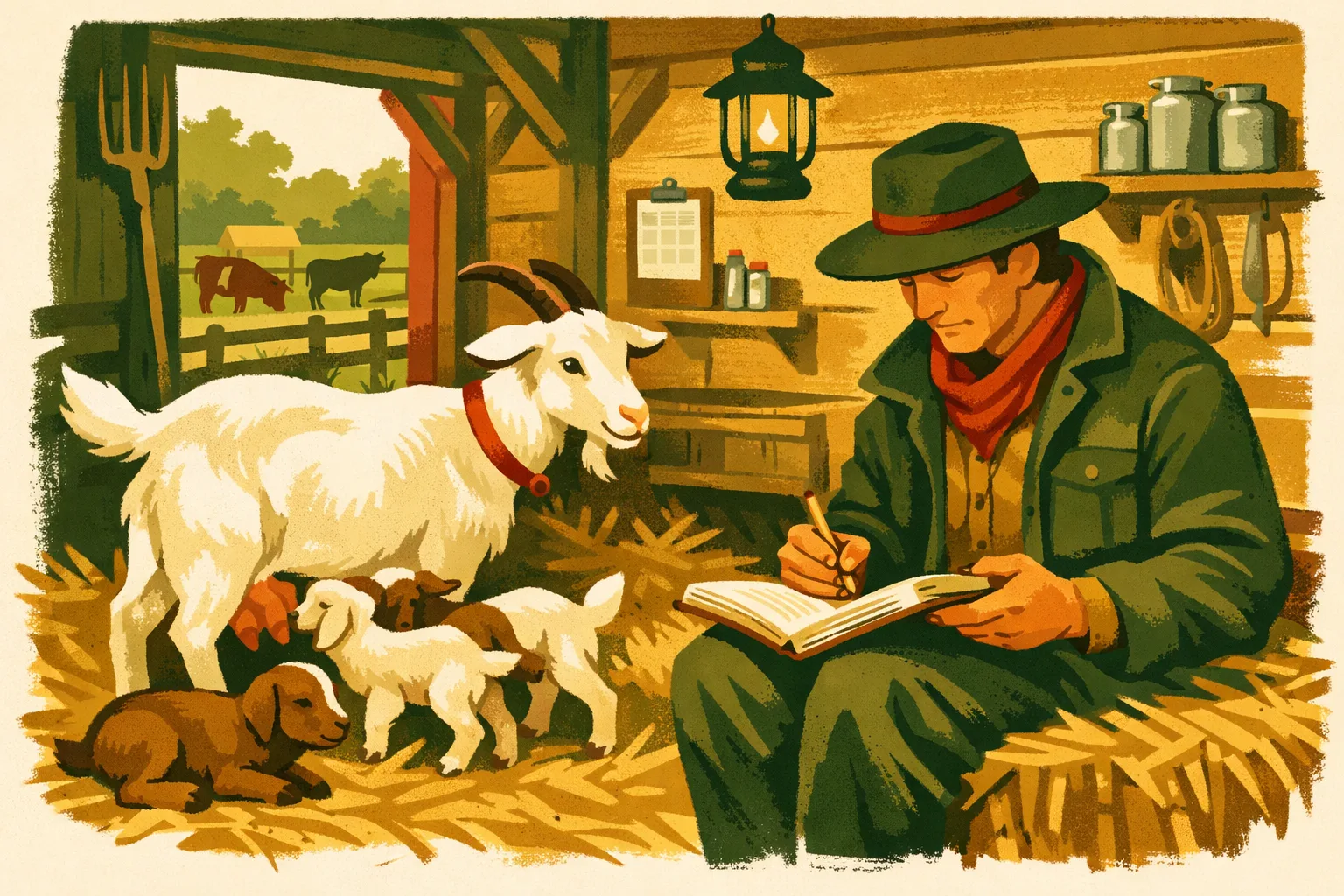
Kidding season is where breeding plans become inventory, milk potential, sale kids, replacement females, and cull decisions. If records are thin, the operation ends up relying on memory during the busiest weeks of the year—exactly when mistakes are easiest to make. A good kidding record system gives every kid a clean start, every doe a performance history, and every manager a defensible way to decide what stays, what sells, and what gets corrected before the next breeding season.
For commercial goat producers, kidding records are not just “birth notes.” They are the foundation of goat herd management across breeding, health, labor planning, marketing, registry paperwork, and cash flow. Dairy, meat, and fiber herds all need the same core data, but each enterprise also has records that matter more for profitability.
Why Kidding Records Matter in Goat Herd Management
Kidding season compresses a lot of decisions into a short period:
- Which kids need colostrum support?
- Which dams are raising kids well without help?
- Which does had difficult deliveries?
- Which buck is producing the most marketable offspring?
- Which doelings should be retained?
- Which kids need disbudding, castration, tattoos, registration, or DNA testing?
- Which animals should be flagged for culling after weaning?
Without structured records, those decisions get delayed or made inconsistently. A kid that misses colostrum documentation may become a weak kid problem. A doe that repeatedly abandons kids may stay in the herd too long. A buck that produces slow-growing kids may continue covering does because no one tied birth and weaning data back to sire.
Good records do three things:
- Protect kid survival and early health
- Create accurate dam and sire performance history
- Support sales, registration, and replacement selection
A practical kidding record system should be fast enough to use in the barn, detailed enough for management, and organized enough that you can review it after the season.
Core Kidding Records Every Goat Operation Should Capture
Every goat operation—dairy, meat, or fiber—should start with a consistent birth record. The goal is to create one complete event for the doe and link every kid in that litter to the correct dam, sire, date, and outcome.
Doe Identification
Record the dam’s permanent ID first. This may be:
- Ear tag
- Tattoo
- Microchip
- Registered name
- Barn name
- Herdbook number
- Management number
Use the same primary ID across breeding, health, kidding, milk, and sale records. If a doe is listed as “D12” in breeding records and “Daisy” in kidding records, errors will happen. For commercial herds, a numeric or alphanumeric ID is usually more reliable than barn names alone.
For registered herds, record both:
- Permanent identification: tattoo, microchip, or registry-approved ID
- Registry information: registered name, registration number, association, and ownership details
Kidding Date and Time
Record the date every time. Time is also useful when:
- You monitor colostrum timing
- Kids are born during freezing or hot conditions
- Labor was prolonged
- Multiple staff are rotating checks
- A doe kids unexpectedly
- You are tracking birth-to-nursing interval
Time does not need to be perfect to the minute, but “6:30 a.m.” is better than “morning” when you are deciding whether a kid has nursed soon enough.
Breeding Group or Sire
The sire record is one of the most valuable parts of kidding data. At minimum, record:
- Service sire
- Exposure group
- Breeding date or exposure window
- Artificial insemination date, if used
- Backup buck, if applicable
If the doe was exposed to multiple bucks, record that uncertainty clearly. Do not guess. Mark the sire as “possible” or “unknown” until DNA, appearance, breeding dates, or registry rules can confirm parentage.
For seedstock and registered herds, sire accuracy directly affects registration and buyer confidence. For commercial herds, sire records help evaluate buck performance for birth weights, kid vigor, growth, udder traits in daughters, and market value.
Litter Size and Individual Kid Count
Record total kids born, then record each kid individually.
At the litter level, capture:
- Singles, twins, triplets, quads, or higher
- Born alive
- Stillborn
- Mummified fetus, if present
- Died before tagging
- Died before weaning
- Retained kids
- Sold kids
At the kid level, capture:
- Kid ID
- Sex
- Birth status
- Birth weight, if used
- Color or markings
- Horn status if known
- Nursing status
- Interventions
- Health notes
The litter-level record helps evaluate doe productivity. The kid-level record supports health, growth, sale, and registration management.
Birth Ease and Assistance
Kidding difficulty is one of the most useful culling and breeding records. Use a simple scoring system your team can apply consistently.
Example birth assistance categories:
- Unassisted: doe kidded without help
- Observed only: staff present, no intervention
- Minor assistance: repositioned kid, light traction, cleared airway
- Major assistance: prolonged manipulation, strong traction, vet involvement
- Surgical or emergency: cesarean, severe dystocia, doe or kid at high risk
Record what happened, not just “hard kidding.” Useful notes include:
- Malpresentation
- Oversized kid
- Ringwomb or poor dilation
- Weak contractions
- Retained placenta concern
- Doe exhaustion
- Kid pulled dead
- Vet called
These details matter when deciding whether to rebreed a doe, change buck pairings, or adjust nutrition during late gestation.
Kid Sex and Identification
Record kid sex immediately:
- Buckling
- Doeling
- Wether, if castrated later
- Unknown, if not confirmed at birth
Assign temporary or permanent IDs as early as practical. Common methods include:
- Neck bands
- Small kid collars
- Ear tags
- Paint marks
- Leg bands
- Tattoos
- Microchips
- Photos
For commercial kidding barns, temporary ID is often used at birth, followed by permanent ID after the kid is dry, vigorous, and ready for tagging or tattooing. The key is to avoid mixing kids between dams before ID is assigned.
Birth Weight
Birth weight is optional in some commercial herds, but it is highly valuable when you are selecting replacement stock or evaluating sire groups.
Record birth weight when:
- You sell breeding stock
- You manage high-value dairy or fiber goats
- You compare buck lines
- You have weak kid issues
- You have dystocia concerns
- You retain doelings
- You market performance-tested kids
Use a hanging scale, digital livestock scale, or kid sling. Weigh as soon as practical after birth, before the kid has had significant milk intake.
Birth weight is most useful when paired with:
- Litter size
- Dam age
- Sire
- Gestation length, if known
- Weaning weight
- Health events
A small triplet may be normal. A small single from a mature doe may require more attention.
Colostrum Records: The First Critical Health Log
Colostrum management is one of the most time-sensitive parts of kidding season. Records help staff know which kids have nursed, which kids need help, and which kids received supplemental colostrum.
What to Record for Colostrum
For each kid, log:
- Time born
- Time first observed nursing
- Whether kid nursed dam unassisted
- Whether kid was assisted onto teat
- Whether colostrum was bottle-fed
- Amount fed
- Source of colostrum
- Staff member who confirmed intake
- Kid vigor after feeding
For dairy herds practicing CAE prevention or bottle-rearing, record whether the kid received:
- Heat-treated colostrum
- Pasteurized milk
- Commercial colostrum replacer
- Dam’s raw colostrum
- Pooled colostrum
Keep the source clear. If disease control is part of your herd health plan, colostrum source is not a minor detail.
Practical Colostrum Timing Record
A simple system works well:
- 0 hours: kid born
- Within first check: verify breathing, warmth, dam interest
- Early window: confirm nursing or assist
- Later follow-up: confirm full belly, warmth, alertness, and dam-kid bond
Many herds use a whiteboard, barn card, or mobile record to mark “Nursed: Yes/No.” The problem with whiteboards is that the data often disappears after chores. Move that record into your permanent herd system before the day ends.
Colostrum Cost and Time Estimates
Typical time and cost ranges vary by herd size and system, but for planning:
- Observation and nursing confirmation: about 2–5 minutes per kid when conditions are normal
- Assisted nursing: about 5–15 minutes per kid
- Bottle-feeding colostrum: about 10–20 minutes per kid, including warming and cleanup
- Commercial colostrum replacer: often a noticeable per-kid cost, depending on brand and feeding rate
- Stored colostrum program: requires freezer space, labeled containers, thawing equipment, and staff discipline
The record should show not just whether a kid survived the first day, but what level of labor and support that survival required.
Dam-Kid Bond Records
Dam-kid bond records are especially useful in meat and fiber herds where kids are commonly dam-raised. They are also useful in dairy herds when kids stay with dams for any period before separation.
What to Observe
Record dam behavior after kidding:
- Licked kids promptly
- Allowed nursing
- Talked to kids
- Stayed with litter
- Claimed all kids in multiple births
- Rejected one or more kids
- Aggressive toward kids
- Walked away
- Confused in crowded pen
- Needed jug time
- Needed restraint for nursing
Record kid behavior too:
- Stood quickly
- Searched for teat
- Latched without help
- Weak suck
- Wandering from dam
- Chilled
- Vocal but not nursing
- Full belly confirmed
A doe that raises twins with no assistance in pasture conditions has a different management value than a doe that requires repeated handling to accept her kids.
Jug and Pen Records
If you use kidding jugs or bonding pens, record:
- Date and time moved into jug
- Reason for jug
- Litter size
- Pen number
- Feed and water checks
- Kid nursing status
- Date released
- Problems observed
This helps with labor planning and facility use. After the season, you can review whether you had enough pens, where bottlenecks occurred, and which does required extra space or attention.
Dam Performance Notes
Dam-kid bond records should feed into the doe’s performance history. Add simple tags such as:
- Excellent mother
- Good mother
- Needs observation
- Poor mother
- Rejected kid
- Aggressive
- Heavy milker
- Low milk
- Udder issue
- Cull candidate
These tags are especially valuable when sorting bred does the next year. High-risk does can be penned closer to the barn, checked more often, or culled before they create another labor problem.
Litter Data That Supports Better Breeding Decisions
Kidding records should help answer whether each doe earned her place in the herd and whether each buck improved the crop.
Dam Productivity Measures
Track by doe:
- Number of kids born
- Number born alive
- Number weaned
- Total litter birth weight, if used
- Total litter weaning weight, if used
- Kidding interval
- Assistance required
- Udder soundness
- Mothering score
- Kid survival
- Replacement daughters retained
For commercial herds, the most useful measure is not just “how many did she have?” It is “how many did she raise with acceptable labor and health cost?”
A doe that delivers triplets every year but loses one and requires bottle support may not outperform a doe that consistently raises twins without intervention.
Sire Group Review
Track by sire:
- Number of does exposed
- Number confirmed pregnant
- Number kidded
- Total kids born
- Live kids born
- Average litter size by doe group
- Birth assistance events
- Kid vigor notes
- Birth weights
- Weaning weights
- Structural defects
- Replacement quality
- Market performance
For dairy herds, sire records also support daughter evaluation for udder attachment, teat placement, production, and temperament. For fiber herds, connect sire to fleece or fiber data. For meat herds, tie sire to growth, muscling, survivability, and sale weight.
Doe Age and Parity
Kidding records should include doe age and parity:
- First freshener
- Second kidding
- Mature doe
- Aged doe
First fresheners often need different expectations than mature does. If you do not separate parity in your records, you may misread performance. A yearling raising a single may be acceptable. A mature doe repeatedly raising a single when bred to a productive buck may need review.
Dairy, Meat, and Fiber Goat Kidding Records Compared
All goat operations need accurate kidding records, but each enterprise has different profit drivers. Use the same core system, then add enterprise-specific fields.
| Operation Type | Kidding Records to Prioritize | Why It Matters | Follow-Up Records |
|---|---|---|---|
| Dairy goats | Freshening date, udder condition, colostrum source, kid removal time, bottle protocol, doeling retention, registry details | Freshening starts lactation records and replacement selection | Milk weights, SCC/mastitis notes, udder scores, AI/sire data |
| Meat goats | Litter size, birth weight, kid vigor, mothering ability, pasture survivability, weaning weight, market group | Profit depends on live kids raised efficiently to sale weight | Weight gain, deworming, weaning, sale lot, carcass or buyer feedback |
| Fiber goats | Birth data, parentage, color, fiber traits, kid vigor, dam milk, registry eligibility, retained breeding stock | Fiber value depends on genetics, consistency, and replacement quality | Fleece weight, micron or grade, shearing records, color class, structural soundness |
| Seedstock herds | Parentage, birth type, permanent ID, tattoos, DNA, defects, registration deadlines | Buyer confidence depends on accurate pedigree and documentation | Registration, transfers, health papers, performance records |
| Commercial mixed herds | Survival, labor required, doe productivity, kid treatments, sale readiness | Records help reduce losses and identify high-maintenance animals | Weaning groups, cull lists, replacement selection, revenue tracking |
The best kidding record system is not the most complicated one. It is the one your crew will actually use every day, then review after the season.
Disbudding Records
Disbudding is common in many dairy goat operations and some commercial herds, depending on breed, market, housing, and buyer preference. Because timing, technique, and follow-up matter, disbudding should be recorded as a health and management event.
What to Record
For each kid, log:
- Disbudding date
- Kid age
- Horn bud development
- Staff member or veterinarian
- Method used
- Pain control or medication, if used under veterinary direction
- Any complications
- Follow-up check
- Scurs observed later
Do not rely on memory for which kids have been done. During a busy kidding season, it is easy to miss one kid in a group or treat the same kid twice on paper.
Disbudding Timing and Scheduling
Timing depends on breed, sex, horn growth, and your veterinary guidance. Bucklings often develop horn buds earlier than doelings. Larger breeds may require earlier attention than smaller breeds.
A practical record setup includes:
- “Needs disbudding” flag at birth
- Target date
- Completed date
- Follow-up date
- Scurs or regrowth note
For registered or breeding stock, disbudding records also help when buyers ask about horn status and scur history.
Cost and Labor Estimates
Typical planning estimates:
- Disbudding setup time: 10–20 minutes to heat equipment, prepare holding area, and gather kids
- Per-kid handling and procedure time: often 3–8 minutes, depending on restraint and experience
- Follow-up check: 1–2 minutes per kid
- Equipment cost: a disbudding iron, restraint box, extension cord or power source, gloves, and first-aid supplies
- Veterinary cost: varies by region and whether pain control protocols or complications are involved
Records protect both animal welfare and management consistency. They also give you a way to identify whether certain sire lines produce horn growth that is harder to manage.
Wethering and Castration Records
Wethering records matter for meat marketing, companion sales, management groups, and health tracking. Any castration method should be done according to local regulations, veterinary guidance, and animal welfare standards.
What to Record
For each male kid, log:
- Birth sex
- Intended use: buck prospect, wether, market kid, retained breeding buck
- Castration decision date
- Castration date
- Method used
- Staff member or veterinarian
- Pain control or medication, if used under veterinary direction
- Tetanus prevention status
- Follow-up check
- Complications
The key management point is to separate “buckling at birth” from “wether after castration.” If your records do not update sex/status after castration, sale groups and inventory counts become inaccurate.
Deciding Which Bucklings Stay Intact
Before castration, review:
- Dam performance
- Sire value
- Birth type
- Structural soundness
- Growth
- Breed character
- Fiber or dairy potential
- Buyer demand
- Genetic diversity
- Defects or disqualifications
For commercial herds, most bucklings will not justify remaining intact. Keeping too many buck prospects increases management complexity and can create accidental breeding risk.
Wethering Schedule Records
A practical schedule includes:
- Flag male kids at birth
- Review buck prospects by a set age or weight
- Assign castration list
- Record procedure
- Recheck according to method and herd health plan
- Move to market/wether group when recovered
Costs and labor vary by method and veterinarian involvement. For planning, expect additional handling, restraint, health supplies, and follow-up time. The record helps you confirm every kid was handled and recovered.
Health Records Tied to Kidding Season
Kidding season health records are not limited to kids. The doe’s recovery and the kid’s early health both affect profitability.
Doe Health Events to Log
For each doe, record:
- Kidding difficulty
- Retained placenta concern
- Excessive bleeding
- Prolapse
- Pregnancy toxemia signs
- Milk fever signs
- Mastitis or abnormal milk
- Udder edema
- Poor appetite
- Fever
- Lameness
- Medication administered
- Veterinary visit
- Withdrawal dates for milk or meat
If a doe receives medication, record:
- Drug name
- Dose
- Route
- Date and time
- Person administering
- Lot number, if required by your protocol
- Prescribing veterinarian, when applicable
- Meat withdrawal
- Milk withdrawal
Commercial operations need clean treatment records for food safety, audits, buyer requirements, and internal accountability.
Kid Health Events to Log
For each kid, record:
- Weak kid
- Chilling
- Tube feeding, if performed by trained staff
- Navel treatment
- Diarrhea
- Pneumonia signs
- Joint ill concern
- Birth injury
- Dehydration
- Supplemental feeding
- Medication
- Death loss
- Necropsy or suspected cause of death
Navel treatment records can be simple: date, product, and staff member. If you have repeated navel infections, those records help identify whether the issue is bedding, weather, iodine/chlorhexidine protocol, delayed treatment, or sanitation.
Mortality and Loss Records
Kid losses are hard to record in the moment, but they are some of the most valuable records you can keep.
Log:
- Kid ID or temporary ID
- Dam
- Sire, if known
- Date of death
- Age at death
- Birth status
- Suspected cause
- Whether vet examined
- Whether sample submitted
- Disposal method
- Prevention note
Do not leave death records as “found dead” if staff observed clues. Add useful details such as chilled, not nursed, crushed, rejected, diarrhea, predator concern, or unknown. Patterns across the season are what help you improve.
Breed Registry and Identification Requirements
Registered goat operations need kidding records that meet association requirements. Requirements vary by breed and registry, so always verify the current rules with the relevant association. Your records should be detailed enough that registration paperwork is routine, not a detective project.
Common Registry Data to Capture
For each registered or potentially registered kid, record:
- Registered dam name and number
- Registered sire name and number
- Breeder name
- Owner name
- Date of birth
- Sex
- Birth type
- Color and markings
- Horn status, if required
- Tattoo or microchip
- Herd tattoo prefix, where applicable
- DNA case number, if required
- Service memo or breeding certificate, if applicable
- Embryo transfer or AI details, if applicable
- Registration application date
- Registration number once assigned
- Transfer date for sale animals
If you sell kids before registration is complete, keep records showing registration eligibility and parentage. Buyers of breeding animals expect accurate paperwork.
Tattoos, Microchips, and Ear Tags
Many registries require permanent ID. Depending on the registry and breed, this may include:
- Ear tattoo
- Tail web tattoo
- Microchip
- Official ear tag
- Herd prefix
- Individual animal code
Record the exact tattoo or microchip number after application. Do not record what you intended to apply—record what was actually applied and check it before submitting paperwork.
For large kidding crops, make a tattoo worksheet before the season. Assign sequences and double-check against live kids. Duplicate tattoos create registration problems that are frustrating and avoidable.
Parentage and DNA Records
DNA may be required or recommended for:
- AI kids
- Multiple-sire breeding groups
- Embryo transfer offspring
- High-value seedstock
- Registry compliance
- Disputed parentage
- Sale assurance
Record:
- Sample date
- Sample type
- Lab or registry submission
- Case number
- Results date
- Confirmed sire and dam
- Any exclusion result
For herds using more than one buck, DNA records can protect your reputation and prevent inaccurate pedigrees from entering the market.
Dairy Goat Kidding Records
Dairy herds have unique kidding records because kidding begins the lactation cycle. Freshening data must connect directly to milk records and replacement selection.
Freshening and Lactation Start
Record:
- Freshening date
- Age at freshening
- Lactation number
- Udder fill
- Teat condition
- Ease of milking
- Colostrum handling
- Kid removal time
- Doe health after freshening
- Milk withdrawal status if treated
This record becomes the starting point for milk production evaluation. If lactation records are separated from kidding records, you may miss which does freshen easily and milk well without extra labor.
Kid Removal and Bottle Protocol
If kids are removed from dams, record:
- Time removed
- Reason for removal
- Colostrum source
- First feeding time
- Amount fed
- Bottle group
- Heat-treated or pasteurized protocol
- Foster or grafting attempts
- Mortality or illness
Dairy operations often have the most detailed early-life feeding records because replacement doelings need a strong start and disease prevention protocols must be consistent.
Dairy Replacement Selection
At birth, flag potential replacements based on:
- Dam production history
- Udder traits in dam line
- Sire proof or herd performance
- Birth type
- Kid vigor
- Structural soundness
- Breed character
- Genetic diversity
Update the selection decision at weaning and again before breeding age. A doeling that looked promising at birth may not remain a replacement candidate if growth, structure, or health records fall short.
Meat Goat Kidding Records
Meat goat operations rely heavily on reproductive efficiency, kid survival, and sale weight. Kidding records should identify does that raise profitable kids with low labor.
Pasture and Range Kidding Notes
For pasture kidding, record:
- Pasture or paddock
- Weather at birth
- Shelter access
- Predator pressure concerns
- Doe isolation behavior
- Kid vigor
- Number of kids found with doe
- Mismothering
- Grafting or fostering
- Losses by pasture group
If losses cluster in a specific pasture or weather event, the record helps identify whether shelter, stocking density, predator control, or kidding group size needs adjustment.
Growth and Sale Linkage
At birth, capture the data that will matter at sale:
- Dam
- Sire group
- Birth type
- Birth date
- Sex
- Weaning group
- Health treatments
- Weaning weight
- Sale date
- Sale weight
- Buyer or market
- Price received
The most profitable doe is not always the doe with the largest litter. She is the doe that weans saleable pounds without excessive feed, treatment, or labor.
Commercial Cull Decisions
Flag does for review if they:
- Failed to kid after exposure
- Required major assistance
- Rejected kids
- Lost kids repeatedly
- Had poor udder function
- Needed repeated intervention
- Produced slow-growing kids
- Had chronic health problems
Cull decisions should be based on records across seasons, not one bad day unless the event was severe.
Fiber Goat Kidding Records
Fiber goat operations need kidding records that connect parentage, color, growth, and eventual fiber performance. Whether you raise Angora, cashmere, Pygora, or other fiber-producing goats, birth records shape replacement choices.
Fiber-Specific Birth Notes
Record:
- Color and markings
- Parent fiber traits
- Birth coat observations
- Structural soundness
- Kid vigor
- Dam milk and mothering
- Litter size
- Breed registry eligibility
- Retained fiber prospect status
Birth coat does not replace mature fiber evaluation, but it helps build a complete record from birth to first shearing.
Connecting Kidding to Fiber Records
Later records should link back to the kid’s birth record:
- First shearing date
- Fleece weight
- Fiber grade or micron, if measured
- Staple length
- Color class
- Contamination notes
- Skin or parasite issues
- Body condition
- Reproductive performance as adult
This long-term record helps identify which dam and sire combinations produce kids that survive well and develop the fiber qualities your market rewards.
Practical Kidding Record Checklist
Use this checklist before and during kidding season. Adjust it to match your herd size, labor, and enterprise type.
Before Kidding Starts
- Confirm bred doe list
- Record expected kidding dates or exposure windows
- Verify sire assignments
- Prepare kidding pens, jugs, or pasture groups
- Set up temporary kid ID supplies
- Prepare permanent tags, tattoos, or microchips
- Check scale, sling, and batteries
- Stock colostrum supplies
- Label frozen colostrum by doe, date, and status
- Prepare navel treatment supplies
- Review disbudding and castration schedule
- Confirm veterinary contact and emergency plan
- Print or set up digital kidding forms
- Train staff on required fields
- Decide who enters permanent records each day
At Each Kidding
- Identify dam
- Record date and time
- Record location or pen
- Count all kids born
- Record live, dead, weak, or abnormal kids
- Identify each kid
- Record sex
- Record birth weight if used
- Confirm nursing or colostrum feeding
- Check dam-kid bond
- Record assistance level
- Treat navels according to protocol
- Note doe udder and health status
- Flag kids needing disbudding, castration, registration, or special care
Within 24 Hours
- Confirm every kid has an ID
- Recheck nursing and bellies
- Recheck weak or assisted kids
- Record supplemental feedings
- Update doe health notes
- Assign bottle groups if used
- Enter records into permanent system
- Schedule disbudding or tattoo tasks
- Mark registry candidates
- Flag high-risk does for observation
Before Weaning
- Record health treatments
- Update sex/status after castration
- Complete permanent ID
- Record disbudding status and follow-up
- Submit registration paperwork where needed
- Record weaning weights
- Assign sale, replacement, or cull groups
- Review dam performance
Time and Cost Planning for Kidding Records
Records take time, but poor records usually cost more through missed treatments, lost kids, inaccurate sales, and weak replacement decisions.
Record-Keeping Labor Estimates
For planning, expect:
- Basic birth record: 3–6 minutes per litter
- Detailed kid-level records with weights: 5–12 minutes per litter
- Colostrum and assisted feeding notes: 5–20 minutes per affected kid
- Registry documentation: 10–30 minutes per kid, depending on parentage and ID requirements
- Daily data cleanup during kidding season: 15–45 minutes per day for small to mid-sized commercial herds; more for large herds or registered operations
The most efficient system is to capture data once, at the point of work, then use it for health, breeding, inventory, sales, and registry decisions.
Supply Costs to Budget
Common kidding record-related supplies include:
- Waterproof notebook or barn cards
- Ear tags or temporary collars
- Tagger and spare pins
- Tattoo kit and ink
- Microchips and scanner, if used
- Hanging scale or digital kid scale
- Kid sling
- Colostrum labels and freezer containers
- Whiteboard or pen cards
- Mobile device protection for barn use
Costs vary widely based on herd size, equipment quality, and whether you operate registered or commercial stock. Budget for both the physical supplies and the labor to keep records current.
Common Kidding Record Mistakes to Avoid
Recording Litters Without Individual Kids
A note that says “Doe 148 had twins” is not enough. You need individual kid records to manage health, sex, growth, sale, and registration.
Waiting Until the End of the Day
Delayed entry leads to mistakes. If you cannot enter records immediately, use a barn sheet or mobile note and assign one person to update the permanent system daily.
Mixing Temporary and Permanent IDs
If a kid starts as “blue collar doeling” and later becomes “Tag 233,” record the link. Otherwise, early health notes may not follow the animal.
Guessing Sires
Do not assign a sire unless you have a defensible basis. Use exposure records, breeding dates, controlled groups, or DNA.
Failing to Record Assisted Kids
Assistance records are not about blame. They are about future breeding decisions. If a doe needed major help, that belongs in her permanent record.
Losing Registry Details
Tattoo, color, date of birth, and parentage errors can delay registration and frustrate buyers. Record registry data while the kid is still in front of you.
Turning Kidding Records Into Management Decisions
The value of kidding records comes after the season when you review the data.
Review Doe Performance
Sort does by:
- Live kids born
- Kids weaned
- Assistance level
- Mothering score
- Udder problems
- Kid health issues
- Total weaning weight
- Replacement daughters retained
Create categories:
- Keep and rebreed
- Keep but monitor
- Rebreed to different buck
- Sell as commercial
- Cull
Review Buck Performance
Compare sire groups for:
- Pregnancy outcomes
- Litter size
- Birth ease
- Kid vigor
- Growth
- Structural quality
- Replacement value
- Market performance
A buck should be evaluated by the kids he produces, not just how he looks in the pen.
Improve Next Year’s Kidding Season
Use records to adjust:
- Breeding groups
- Doe nutrition
- Kidding dates
- Shelter and pen space
- Staff scheduling
- Colostrum protocols
- Disbudding days
- Wethering plans
- Registry workflow
- Replacement selection
Kidding records are not paperwork for the sake of paperwork. They are the operating history of your herd.
How HerdFlo Helps
HerdFlo gives goat producers a simple way to keep kidding, breeding, health, and inventory records connected in one place. Instead of relying on barn notebooks, whiteboards, or memory, you can track each doe, each litter, and each kid from birth through weaning, sale, breeding, or culling.
With HerdFlo, you can record:
- Kidding dates and litter details
- Dam and sire information
- Individual kid IDs
- Sex, birth status, and notes
- Colostrum and early care events
- Disbudding and wethering tasks
- Health treatments and follow-ups
- Replacement and sale decisions
- Breeding history and future kidding performance
For commercial goat herd management, the advantage is simple: the data you collect during kidding season stays tied to the animal’s permanent record. That makes it easier to identify your best does, evaluate bucks, manage health events, and keep accurate sale or registry information.
You can start tracking your kidding season records in the free HerdFlo app at herdflo.com. If you also need full-operation records beyond the herd—equipment, tasks, expenses, and broader farm management—use FarmsFlo at farmsflo.com.
→ See also: 8-item kidding-season checklist for first-time goat breeders.