7 Cattle Breeding Calculator Rules Ranchers Actually Use in 2026
Calculate 283-day calving dates, return-to-estrus windows, preg-check schedules, and dry-off targets with this practical cattle breeding calculator guide.
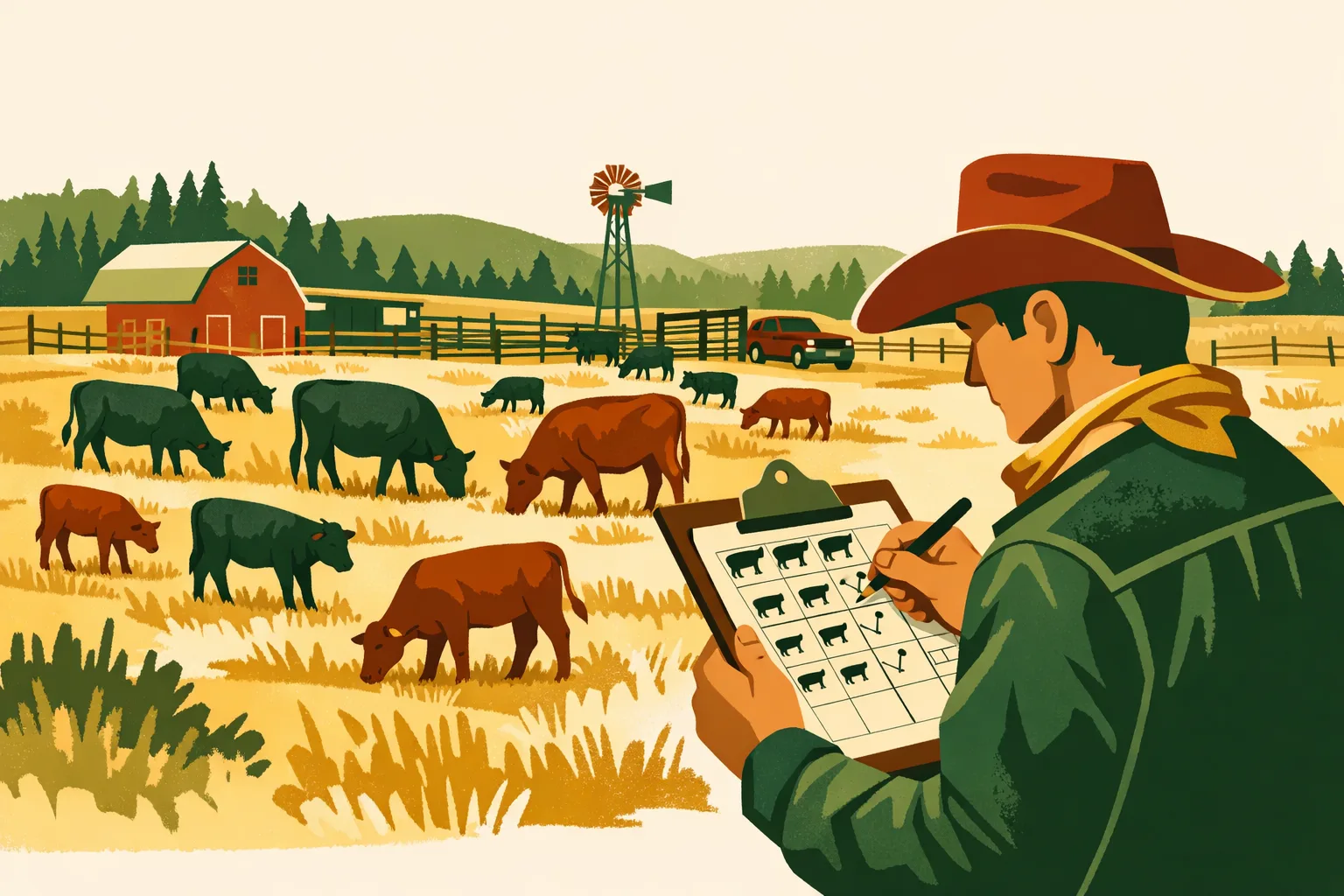
A breeding date is only useful if it turns into a management decision: when to pull bulls, when to preg-check, when to move cows to calving pasture, when to order tags, and when to start watching heifers at 2 a.m. A good cattle breeding calculator does more than add 283 days to a service date. It helps you manage risk across breed type, bull exposure, heat cycles, nutrition, labor, and calving records.
What a Cattle Breeding Calculator Should Actually Do
Most cattle breeding calculators are built around the standard 283-day gestation estimate. That is a good starting point, but ranchers know calving dates can shift depending on breed, sire, cow age, calf sex, nutrition, weather stress, and whether breeding was natural service or AI.
For commercial cattle operations, the calculator should help you answer five practical questions:
- When is this cow likely to calve?
- When should we start watching her closely?
- Was she bred in the first, second, or third cycle?
- Should this cow stay in the herd based on breeding performance?
- How do we plan labor, pasture, tags, vaccines, and marketing around the calf crop?
A calculator is only as useful as the records behind it. If breeding dates, bull exposure dates, preg-check results, and calving outcomes are scattered across notebooks, texts, and memory, the projected due date loses value fast.
Rule 1: Start With 283 Days, Then Adjust by Breed Type
The standard cattle gestation length used by most producers is 283 days from breeding to calving. That is the right baseline for a cattle breeding calculator.
But breed type matters. British breeds such as Angus and Hereford often trend close to the standard average. Continental breeds such as Charolais can run slightly longer. Bos indicus-influenced cattle such as Brahman may also trend longer than British breeds.
These are not hard guarantees. They are planning ranges. Your own herd history should become the final authority after you have several seasons of records.
Breed-Based Gestation Planning Table
| Breed Type | Common Planning Gestation | Practical Calving Watch Window | Ranch Management Note |
|---|---|---|---|
| Angus | 281–283 days | Start watching around day 275 | Strong baseline for commercial calculators; compare individual cow history |
| Hereford | 282–284 days | Start watching around day 276 | Similar to Angus, but track sire lines and cow family trends |
| Brahman / Brahman-influenced | 285–292 days | Start watching around day 280 | Expect more variation; use herd history and bull records closely |
| Charolais | 284–289 days | Start watching around day 279 | Watch calf size, heifer matings, and calving ease EPDs |
| Crossbred commercial cows | 282–288 days | Start watching around day 276–280 | Use breed mix, previous calving records, and sire type |
A calculator should not treat every cow exactly the same if your operation runs straight Angus cows in one group and Brahman-influenced cows in another. The difference between day 281 and day 290 can affect labor scheduling, calving pasture moves, and intervention decisions.
Practical Example
If a cow was bred on June 1:
- Standard 283-day due date: March 11
- Angus planning range: roughly March 9–11
- Hereford planning range: roughly March 10–12
- Charolais planning range: roughly March 12–17
- Brahman-influenced planning range: roughly March 13–20
That spread matters when you are deciding when to begin night checks, when to bring a heavy group closer to facilities, and when to delay moving later-calving cows.
Record to Keep
For each bred female, record:
- Cow ID
- Breed or breed composition
- Sire or bull group
- Breeding date or bull turnout date range
- Projected calving date
- Actual calving date
- Calf ID
- Calving ease score
- Calf sex
- Birth weight, if collected
- Assistance required
- Cow and calf health notes
Over time, your herd records will show whether your Angus cows are actually averaging 282 days, your Charolais-cross heifers are averaging 286, or a specific bull is throwing later calves.
Rule 2: Use 21-Day Heat Cycles to Judge Breeding Progress
The average cow estrous cycle is about 21 days. That makes 21-day blocks one of the most useful tools in cattle breeding management.
Whether you use AI, natural service, or both, a 21-day heat detection system helps you understand how quickly cows are settling.
The Three-Cycle Breeding Window
A common way to manage breeding season is to think in three cycles:
- Cycle 1: Days 1–21
- Cycle 2: Days 22–42
- Cycle 3: Days 43–63
If a cow conceives in the first 21 days, she calves early in the season. Early calves are generally older and heavier at weaning than late calves, all else being equal. If she does not conceive until the third cycle, she calves later and has less time to recover before the next breeding season.
A cattle breeding calculator should help classify females by likely conception cycle, especially when bulls are turned out for a defined exposure period.
How to Use Heat Checks With AI
For artificial insemination programs, heat detection records are especially valuable. Track:
- Standing heat date and time
- Secondary signs such as mounting, mucus, restlessness, rubbed tailhead
- AI date and time
- Technician
- Semen sire
- CIDR or synchronization protocol, if used
- Clean-up bull turnout date
- Return heat date, if observed
If a cow shows standing heat 21 days after AI, she likely did not settle. That gives you a management decision: rebreed by AI, allow clean-up bull service, or mark her for closer preg-check evaluation.
How to Use Heat Checks With Natural Service
Heat detection still matters when bulls are used. You may not see every breeding, but visible heats after bull turnout can tell you something:
- Repeated heats may indicate bull fertility issues, cow reproductive issues, or timing problems.
- Heavy heat activity after the first 21 days may mean cows were not cycling at turnout.
- A sudden drop in heat activity after the first cycle often indicates cows are settling.
This does not replace pregnancy diagnosis, but it gives you early warning.
Time Estimate
For commercial herds, heat observation usually takes:
- Small group near facilities: 15–30 minutes per check
- Pasture breeding group: 30–60 minutes depending on pasture size and terrain
- AI heat detection: often 2–4 observation periods per day, depending on protocol
Many operations combine heat checks with feeding, mineral checks, water checks, or pasture rotation so the time does not become a separate chore.
Rule 3: Calculate From Bull Turnout and Pull Dates, Not Just Single Breeding Dates
A cattle breeding calculator is simple when you know the exact AI date. Natural service is different. Most commercial ranchers know the bull turnout date and pull date, not the exact service date for each cow.
That means your calculator needs to produce a calving window, not just a single due date.
Bull Turnout Formula
Use this basic approach:
- Earliest expected calving date: bull turnout date + expected gestation length
- Latest expected calving date: bull pull date + expected gestation length
For a standard 283-day calculation:
- Bulls turned out: May 20
- Bulls pulled: July 20
- Earliest expected calving: February 27
- Latest expected calving: April 29
That creates a 61-day calving window.
Why Bull Pull Dates Matter
A bull turnout date without a pull date leaves the back end of the calving season open. If you do not know when bulls were removed, late calves become harder to interpret. Were those cows late breeders? Did bulls stay in too long? Did a neighbor’s bull get in? Did a supposedly open cow breed later than expected?
A tight bull exposure window creates a tighter calving season, cleaner weaning groups, and more meaningful culling decisions.
Common Bull Exposure Windows
Many commercial beef operations use exposure windows such as:
- 45 days: aggressive, tight calving season
- 60 days: common balance between conception opportunity and management control
- 90 days: more forgiving, but produces a longer calving season
The right window depends on cow body condition, breed type, forage conditions, bull power, marketing goals, and replacement female strategy.
Practical Cost and Labor Considerations
A long calving season usually costs more in labor and complexity, even if it feels easier during breeding.
Expect added costs from:
- More days of calving checks
- More age variation at weaning
- More complicated vaccine timing
- More sorting at processing
- More record cleanup
- More late cows carried into the next season
A shorter breeding window can increase open cows if nutrition, bull fertility, or cow recovery are not ready. That is why calculators should be paired with records on body condition, bull exams, and preg-check results.
Rule 4: Build Your Calving Watch Window Before the Due Date
The projected due date is not the day you start paying attention. For management purposes, you need a watch window.
A practical rule is to start close observation 7–10 days before the projected due date, earlier for high-risk females.
When to Start Watching
Use these planning points:
- Mature British-breed cows: start around day 275–276
- First-calf heifers: start earlier, often day 270–275
- Charolais-sired calves: watch earlier if calf size is a concern
- Brahman-influenced cows: watch based on previous herd history and signs
- Cows with previous calving difficulty: move to higher-watch group early
- Thin cows or cows under weather stress: monitor closely before expected date
Do not rely only on the calendar. Physical signs still matter.
Pre-Calving Signs to Record
Track the following in your calving book or herd app:
- Udder development
- Springing or swelling of vulva
- Relaxed pelvic ligaments
- Mucus discharge
- Isolation from herd
- Restlessness
- Tail raising
- Water bag appearance
- Onset of active labor
The value of recording signs is not just for that calf. Over time, you learn which cows calve quickly, which need extra time, and which have repeated problems.
Intervention Timing
Every ranch should have a written calving intervention protocol. General guidelines vary by operation and veterinarian, but common triggers include:
- Cow or heifer actively straining with no progress
- Water bag visible too long without calf presentation
- Abnormal presentation
- Visible feet but no progress
- Cow exhausted or repeatedly lying down and getting up
- First-calf heifer showing distress
- Suspected uterine torsion, prolapse, or other emergency
Your veterinarian should help define exact timing for your herd, especially for heifers and high-value breeding stock.
Calving Kit Time and Cost Estimate
A practical calving kit usually takes 1–2 hours to assemble and check before the season.
Common items include:
- OB chains or straps
- OB handles
- Lubricant
- Disposable sleeves
- Iodine or chlorhexidine for navels
- Ear tags and tagger
- Calf puller, if used and personnel are trained
- Thermometer
- Colostrum replacer or supplement
- Feeding tube and bottle
- Flashlight or headlamp
- Towels
- Notebook or mobile app access
- Vet contact list
Cost varies widely depending on what you already own. A basic restock may be modest, while adding a quality calf puller, colostrum products, and durable equipment can raise expenses. The key is to check supplies before the first calf is on the ground, not during a cold rain at midnight.
Rule 5: Separate AI Due Dates From Clean-Up Bull Due Dates
If your operation uses AI followed by clean-up bulls, your cattle breeding calculator needs to separate projected AI calves from projected natural-service calves.
This is one of the most useful record-keeping distinctions in a breeding program.
Why the Difference Matters
AI calves may be tied to specific genetics, calving ease sires, carcass traits, maternal traits, or replacement heifer plans. Clean-up bull calves may still be valuable, but they need to be identified correctly.
If you do not separate them, you can end up with:
- Incorrect sire records
- Wrong replacement heifer decisions
- Confusing calving dates
- Poor evaluation of AI conception
- Misleading bull performance records
- Marketing errors for sire-identified groups
AI Plus Clean-Up Example
Assume:
- AI date: May 10
- Expected AI due date using 283 days: February 17
- Clean-up bulls turned out: May 20
- Clean-up bulls pulled: July 15
- Clean-up calving window: February 27 to April 23
If a cow calves on February 16, she likely settled AI. If she calves March 20, she likely settled to the clean-up bull. If she calves February 25, sire assignment may be less clear, especially if gestation length varies by breed or sire.
DNA testing may be needed for registered herds or high-value sire verification, but commercial herds can still make better decisions by recording AI dates, clean-up bull dates, and actual calving dates.
Record Fields for AI Programs
For every AI female, record:
- Cow ID
- Protocol used
- Heat observed or timed AI
- AI date
- AI time
- Semen sire
- Technician
- Semen batch or cane, if tracked
- Clean-up bull ID or group
- Clean-up bull turnout date
- Pregnancy diagnosis result
- Calving date
- Calf ID
- Probable sire
- Sire confirmed, if tested
These records help you evaluate both the AI program and the clean-up bulls. If AI conception is lower than expected, you can review heat detection, timing, semen handling, technician performance, cow body condition, and protocol compliance.
Rule 6: Use Pregnancy Checks to Correct the Calculator
A cattle breeding calculator predicts. Pregnancy diagnosis confirms.
A projected due date should be updated after preg-check when your veterinarian estimates stage of pregnancy. This is especially useful in natural-service herds where exact breeding dates are unknown.
Common Pregnancy Check Methods
Producers commonly use:
- Rectal palpation
- Ultrasound
- Blood testing
Each has a place. Your veterinarian can recommend the best fit based on timing, facilities, herd size, and how precise you need fetal age estimates to be.
What Preg-Check Data Should Tell You
A good preg-check record should capture more than “bred” or “open.”
Track:
- Pregnant or open
- Estimated days or months pregnant
- Expected calving period
- Fetal sex, if determined by ultrasound and timing allows
- Cow body condition score
- Reproductive tract concerns
- Cull recommendation
- Vet notes
- Group or pasture
- Bull exposure group
This data lets you split cows into calving groups and compare expected calving dates against the calculator.
Example: Adjusting Due Dates After Preg-Check
Suppose bulls were turned out May 1 and pulled June 30. The calculator shows a calving window from February 8 to April 9.
At preg-check, the veterinarian estimates one cow is about 90 days pregnant on September 1. That suggests she likely conceived around early June, not early May. Her projected calving date should move later in the window.
That one adjustment affects:
- Calving pasture assignment
- Feed grouping
- Labor watch list
- Replacement decision
- Whether she counts as an early or late breeder
Open Cow Decisions
Open cows are expensive because they consume feed, pasture, labor, and health inputs without producing a calf that season. The right decision depends on market conditions, age, genetics, and why she is open.
Record the reason if known:
- Open after full exposure
- Aborted
- Late calver not rebred
- Poor body condition
- Lameness or illness
- Bull issue suspected
- First-calf heifer recovery problem
- Unknown
This history prevents the same cow from getting repeated chances without accountability.
Rule 7: Turn Calving Book Logs Into Next Season’s Breeding Decisions
The calving book is where the calculator proves itself. If projected dates and actual calving records are connected, you can make better decisions next breeding season.
A good calving record is not just “Cow 318 had a bull calf.” It should show whether that female fits your operation.
Minimum Calving Book Fields
Record at least:
- Cow ID
- Calf ID
- Calving date
- Calf sex
- Sire or probable sire
- Birth weight, if collected
- Calving ease score
- Assistance required
- Calf vigor
- Navel treatment
- Colostrum intervention
- Cow mothering ability
- Health treatment
- Death loss, if any
- Notes for culling or retention
For commercial herds, consistency matters more than perfection. A simple, complete record beats an elaborate system that does not get used during a busy calving week.
Calving Ease Scoring
Use a clear scoring system. For example:
- 1: Unassisted
- 2: Easy pull
- 3: Hard pull
- 4: Surgical assistance or major difficulty
- 5: Abnormal presentation, severe issue, or loss
Whatever scale you use, keep it consistent. If one employee marks “assisted” for a light pull and another only marks assistance for a calf jack, your records become less useful.
What to Review After Calving Season
After the last calf is processed, review:
- First calf born
- Last calf born
- Percent born in first 21 days
- Percent born in first 42 days
- Late-calving cows
- Open cows from preg-check
- Calving difficulty by sire
- Calving difficulty by cow age
- Calf losses by cause
- Cow health issues
- Heifer performance
- Bull group performance
Avoid guessing from memory. Use the records.
How Calving Records Improve the Calculator
Each year, your own data improves projected calving accuracy. You may find:
- One sire line tends to run longer gestation
- First-calf heifers need earlier monitoring
- A Brahman-influenced group calves later than expected
- Certain cows consistently breed first cycle
- Some cows drift later every year
- One bull group produced more assisted births
- Late-born heifers struggle to rebreed on schedule
That turns a basic cattle breeding calculator into a herd-specific management tool.
Practical Action List: Set Up Your Breeding Calculator System
Use this checklist before breeding season starts.
Before Bull Turnout or AI
- Confirm cow and heifer IDs are readable
- Update herd inventory
- Record breed or breed composition
- Body condition score breeding females
- Complete pre-breeding vaccinations per veterinary protocol
- Schedule bull breeding soundness exams
- Assign bulls to pasture groups
- Record bull IDs and pasture assignments
- Set planned turnout date
- Set planned pull date
- Decide breeding season length
- Prepare AI protocols, if used
- Train staff on heat detection signs
- Confirm record-keeping method
During Breeding Season
- Record AI dates and semen sires
- Record observed heats
- Record return heats
- Track bull turnout dates by pasture
- Watch bull soundness and activity
- Note injuries, lameness, or illness
- Record pasture moves
- Keep clean-up bull dates separate from AI dates
- Pull bulls on schedule
- Document any accidental exposure
At Preg-Check
- Record pregnant/open status
- Record estimated fetal age
- Assign expected calving period
- Identify late-bred cows
- Mark opens for cull review
- Compare results by bull group
- Compare AI versus clean-up conception
- Update projected due dates
Before Calving
- Sort early, middle, and late calving groups
- Move heifers to higher-watch area
- Restock calving supplies
- Prepare tags and tag sequence
- Review calving assistance protocol
- Confirm vet emergency contact
- Set calving check schedule
- Review projected due dates with staff
During Calving
- Record every calf the day it is born
- Match calf ID to cow ID
- Record calving ease
- Record treatments
- Record losses and causes
- Update actual calving date
- Flag cows for culling or retention decisions
- Keep AI and natural-service calf records separate
After Calving
- Review calving distribution
- Identify late-calving cows
- Evaluate sire groups
- Review assisted births
- Review calf losses
- Compare projected versus actual calving dates
- Decide replacement heifer criteria
- Build next year’s breeding plan
Cost and Time Estimates for Running a Better Breeding Calendar
The cost of using a cattle breeding calculator is usually not the calculator itself. The real investment is in accurate data collection and follow-through.
Time Estimates by Task
| Task | Typical Time Required | Notes |
|---|---|---|
| Enter breeding group setup | 15–45 minutes | Depends on herd size and whether records already exist |
| Record AI event | 1–3 minutes per cow | Faster if cow list and sire list are already loaded |
| Record bull turnout/pull | 5–15 minutes per group | Must include bull IDs and pasture group |
| Heat detection notes | 15–60 minutes per check | Depends on group size and pasture setup |
| Preg-check recording | 30 seconds–2 minutes per cow | Best done chute-side |
| Calving record entry | 1–3 minutes per calf | Faster with mobile records |
| Post-season review | 1–3 hours | Depends on herd size and depth of analysis |
Where Operations Lose Time
Most wasted time comes from:
- Rewriting paper notes into spreadsheets
- Trying to identify calves after tags are delayed
- Searching texts for breeding dates
- Guessing which bull was in which pasture
- Reconstructing calving dates at weaning
- Sorting cows without accurate expected calving groups
A digital record system reduces duplicate entry and keeps breeding, preg-check, and calving data connected.
Common Mistakes With Cattle Breeding Calculators
A calculator can create false confidence if the inputs are poor. Watch for these common mistakes.
Using One Gestation Number for Every Cow
The 283-day average is useful, but breed type and herd history matter. Use it as a baseline, then compare against actual records.
Ignoring Bull Pull Dates
Without a pull date, the calving window stays vague. Always record both turnout and removal.
Mixing AI and Clean-Up Records
If AI and clean-up dates are not separated, sire records become unreliable.
Waiting Until the Due Date to Watch
Start monitoring before the projected due date, especially with heifers and higher-risk matings.
Recording Calves Later From Memory
Calving records should be entered the same day whenever possible. Waiting creates errors in calf ID, birth date, dam ID, and treatment history.
Not Reviewing Late Calvers
A cow that calves late once may deserve another look. A cow that calves late repeatedly is shaping your herd calendar in the wrong direction.
How to Use Calculator Results for Better Herd Decisions
The point of a cattle breeding calculator is not just predicting calves. It is improving herd performance.
Replacement Heifer Selection
Use breeding and calving records to select replacements from:
- Early-born calves
- Dams that breed back early
- Cows with unassisted births
- Good udder and mothering records
- Productive cow families
- Sires that fit your calving ease and growth goals
Avoid keeping heifers from cows that repeatedly calve late, need assistance, or fail to maintain condition.
Culling Decisions
Flag cows that:
- Were open after adequate exposure
- Calved very late
- Needed repeated assistance
- Had poor mothering behavior
- Lost calves due to preventable issues
- Had chronic health problems
- Failed to wean an acceptable calf
Your breeding calculator can identify the timing problem. Your calving book explains the reason.
Bull Evaluation
Compare bull groups by:
- Pregnancy rate
- Calving distribution
- Calving ease
- Calf vigor
- Birth weights
- Weaning performance
- Open cows by pasture
- Injury or soundness issues
If one bull group produces more late pregnancies or more open cows, investigate bull fertility, cow group condition, pasture size, and bull-to-cow ratio.
Labor Planning
Projected calving windows help you plan:
- Night checks
- Employee schedules
- Tagging
- Processing days
- Vaccine timing
- Pasture moves
- Heifer supervision
- Vet availability
A tight, well-recorded calving season is easier to staff and manage than a vague one.
How HerdFlo Helps
HerdFlo helps cattle producers turn breeding dates, bull exposure windows, preg-check results, and calving records into usable herd management data. Instead of keeping projected due dates in one place and calving notes somewhere else, you can track the full chain from breeding to calf record.
With the free HerdFlo app at herdflo.com, you can:
- Track cow and calf IDs
- Record breeding events
- Log bull turnout and pull dates
- Estimate calving windows
- Keep AI and clean-up bull records separate
- Record preg-check results
- Maintain calving book entries
- Track health treatments and notes
- Review herd history when making culling and replacement decisions
If you also need full-operation records beyond the herd, FarmsFlo at farmsflo.com supports broader farm management record-keeping.
A cattle breeding calculator works best when it is connected to real records. Start with the 283-day baseline, adjust for breed and herd history, track 21-day cycles, document bull exposure, and record every calf accurately. HerdFlo gives you a simple way to keep those records organized from breeding season through calving and into the next year’s decisions.